
Carpet Spot Cleaning: Blot, Test, Rinse, and Recheck
On this page
Quick answer
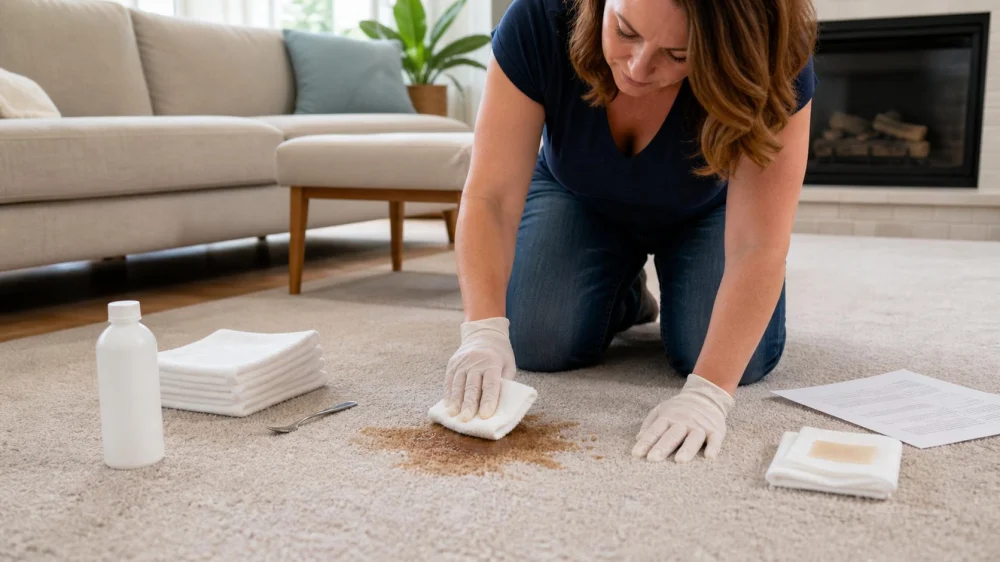
For a fresh carpet spill, protect the area, lift solids, and blot liquid with clean white absorbent material—do not scrub. Identify the carpet fibre and stain, follow the carpet and cleaner labels, and test in a hidden place. Apply small amounts from the outside inward, rinse only as directed, extract moisture, and stop for colour transfer, pile change, odour, or spreading.

Identify the carpet and spill
Find the carpet manufacturer, fibre, construction, colour treatment, backing, warranty, and care guide. Wool, nylon, polyester, triexta, olefin, natural-fibre blends, and specialty dyes can respond differently. A method acceptable for one product can shrink, bleach, brown, or distort another.
Record what spilled, when, amount, temperature, and any product already used. Food, oil, ink, cosmetics, pet accidents, rust, paint, and unknown stains need different chemistry. Treat blood or bodily fluids as a hygiene concern and use appropriate protective and professional guidance rather than ordinary cosmetic cleaning.
Godoy Flooring Services
NorristownMontgomery CountyPennsylvania
1920 W Marshall St suite 10, Norristown, PA 19403, USA
Remove solids and excess liquid
Keep people and pets away. Lift thick material with a dull spoon or scraper, working without pushing it deeper. Vacuum dry loose material only when safe for the substance and equipment. For liquid, place white towels over the spot and press with body-safe hand pressure or a clean weighted object protected from moisture.
Replace towels as they absorb liquid. Blot; do not rub or scrub, which can spread colour and untwist pile. Work before the spill reaches padding and subfloor. Do not pour a large volume of water onto the area because over-wetting expands the affected zone and slows drying.
Test the cleaning product
Use only a product approved by the carpet manufacturer for the fibre and stain, and read the full label. Check ventilation, gloves, dilution, contact time, rinsing, and storage. Never mix cleaners. Combining bleach, ammonia, acids, solvents, disinfectants, or unknown residues can create dangerous fumes or reactions.
Test a small hidden location with the same concentration and method. Blot with a white cloth and inspect for dye transfer, lightening, darkening, texture change, tackiness, or odour after drying. A quick wet check is not enough; some changes appear later. When the product fails the test, stop rather than reducing evidence with another chemical.
Work from edge to center
Apply a small amount to a clean cloth when the label permits rather than saturating the carpet directly. Dab from the outside edge toward the center to control spread. Use a fresh cloth section as soil transfers. Allow only the specified contact time and keep the area ventilated.
Repeat small cycles instead of one heavy application. Check the towel for carpet colour as well as stain colour. Do not use a stiff brush, steam iron, hair dryer, or household solvent unless the carpet manufacturer specifically directs that method. Heat can set some stains, melt fibre, or damage backing.
Rinse and dry without residue
If the approved process calls for rinsing, use the minimum specified clean water and blot or extract it. Cleaner residue can attract soil and create a dark returning spot. Do not rinse solvent-based products with water unless the label says so. Keep rinse tools separate from food and personal-care items.
Press with dry white towels and improve room airflow without applying high heat. Place a fan only when electrical cords and equipment stay safely away from moisture and walkways. Keep the area off-limits until fully dry. Check the backing, pad, baseboard, and subfloor edge when the spill was large.
Know when to stop
Contact a professional for valuable carpet, wool or natural fibre, unknown dye stability, a large spill, padding saturation, repeated wicking, persistent odour, hazardous material, or unsuccessful testing. Also stop when colour transfers, pile distorts, the spot expands, or a strong reaction or breathing irritation occurs.
Ask the cleaner to identify fibre and stain, describe the proposed method, test colourfastness, protect adjacent surfaces, and explain drying. Save product labels and photographs. For warranty claims, contact the retailer or manufacturer before using an unapproved treatment that may affect coverage.
Frequently asked questions
Why did the stain return after drying?
Moisture can wick dissolved material from backing or pad to the surface, or cleaner residue can attract new soil. Repeated return needs source and method review.
Should I scrub a stubborn spot?
No. Scrubbing can spread the stain and damage pile. Use repeated controlled blotting or professional treatment suited to the fibre and substance.
Can I use several products one after another?
Not without confirming chemical compatibility and complete removal. Unknown residues can react. Stop, document what was used, and consult the carpet or cleaning professional.
Evidence and limitations
This guide follows common carpet-care principles: identify fibre and soil, remove excess, blot rather than scrub, test colourfastness, limit moisture, avoid chemical mixing, remove residue, and dry promptly. Manufacturer instructions and warranty requirements control a specific carpet. Hazardous spills and health reactions require specialized guidance.
Conclusion and next steps
Photograph the spill, find the care guide, remove solids, and blot excess liquid. Test one approved product in a hidden area before treating the edge inward. Use minimal moisture, dry fully, and recheck. Stop early when colour, texture, odour, padding, or safety makes professional care the better choice.


 F.M. Floors Supplies5.0 (2 reviews)
 Floor & Decor4.0 (261 reviews)
 Boro Rug & Carpet Warehouse4.0 (83 reviews)
 Long Island Paneling, Ceilings & Floors4.0 (41 reviews)
 SI Carpeting4.0 (8 reviews)
 E M Brown4.0 (29 reviews)
 How to Get Rid of Bad Odors in Your Carpet: Proven Solutions
 Best Carpet Brands for Budget-Friendly Homes: Affordable Options for Every Home
 What Colors Designers Are Choosing for Carpet in 2026 | CarpetHub
 How to Use Carpet to Add Style to Your Living Room
 How to Choose Carpet That Fits Your Budget and Style
 What Are the Benefits of Carpet in a Home with Allergies? | CarpetHub