
Carpet Over Radiant Heat: Check the Whole Floor System
On this page
- Quick answer
- Identify the radiant system
- Collect carpet and pad ratings
- Understand combined thermal resistance
- Coordinate installer, heating contractor, and manufacturer
- Test moisture and prepare the subfloor
- Confirm installation method and adhesive
- Use the approved startup sequence
- Operate within temperature limits
- Respond to uneven heat or carpet changes
- Project checklist
- Energy and indoor-air sources
- Conclusion and next steps
Quick answer
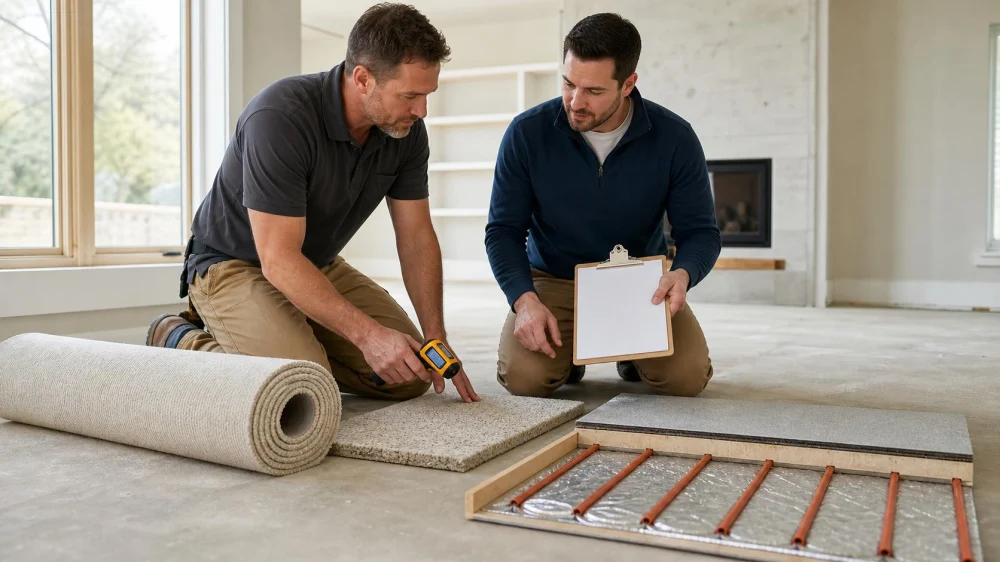
Carpet can work over some radiant-heating floors only when the heating-system designer, carpet manufacturer, pad manufacturer, adhesive supplier, and installer approve the same assembly. Identify whether the system is hydronic or electric and where it sits in the floor. Compare maximum floor temperature, combined carpet-and-pad thermal resistance, subfloor moisture limits, adhesive compatibility, and warranty terms. Use low-resistance materials specified for radiant heat, document sensor placement, and follow the required gradual startup after installation.
Do not choose carpet and cushion independently. The floor covering becomes part of the heating system and can change heat transfer, controls, comfort, and energy use.

Identify the radiant system
Determine whether heat comes from electric cable, electric mat, or hydronic tubing and whether it is embedded in concrete, installed in panels, or attached below a framed floor.
Find the system manufacturer, model, drawings, heating zones, thermostat, floor sensor, design water temperature, and maximum permitted floor-covering resistance.
For an existing home, do not drill, nail, staple, or cut until a qualified contractor maps the heating elements. Damage can create leaks, shock, fire, or system failure.
Collect carpet and pad ratings
Ask for written radiant-heat approval for the exact carpet style, fiber, backing, cushion, seam system, and adhesive. A verbal statement that “carpet is fine” is not enough for warranty planning.
Choose a cushion specifically rated for the system and carpet. Thick, dense, rubberized, or highly insulating padding may reduce heat delivery even if it feels luxurious in a showroom.
Record product names, lot numbers, technical data sheets, indoor-emissions certification, installation instructions, and maximum surface temperature.
Understand combined thermal resistance
Thermal resistance measures how strongly a layer slows heat flow. Carpet, cushion, underlayment, and other layers combine, so the total matters.
Higher resistance can make the system respond more slowly or require a higher supply temperature to heat the room. The heating designer should confirm that the equipment and controls can deliver the required load without exceeding material limits.
Do not compare one carpet's rating with another pad's marketing claim in different units. Ask the professionals to document the combined value in the units the system specification uses.
Coordinate installer, heating contractor, and manufacturer
Before ordering, hold one written review covering the room heat-loss calculation, heating-system limits, floor assembly, carpet products, transition height, doors, baseboards, and warranty responsibilities.
The carpet installer should know heated zones and sensor locations. The heating contractor should know the final floor-covering resistance and attachment method.
Resolve conflicts before installation. If one manufacturer rejects the assembly, changing a material is safer than relying on another party's assumption.
Test moisture and prepare the subfloor
Concrete and wood subfloors must meet the carpet, adhesive, and heating-system requirements for moisture, flatness, cleanliness, strength, and temperature.
Use the specified moisture test, locations, number of tests, and documentation. Turning on heat is not a substitute for curing or moisture testing.
Repair cracks and address leaks or vapor sources before covering the floor. Do not trap damp materials under carpet or seal a moisture problem out of sight.
Confirm installation method and adhesive
Stretch-in, direct-glue, double-glue, tile, and floating systems place different materials between the room and heat source. Use only the approved method.
Adhesives, seam sealers, tapes, patches, and primers need radiant-heat compatibility and temperature limits. Follow spread rate, open time, rolling, ventilation, and cure instructions.
Protect cables, tubes, sensors, and controls from fasteners. Photograph the mapped system before the carpet hides it.
Use the approved startup sequence
The heating system may need to be off before and during carpet installation so the subfloor and adhesive stay within product limits. Confirm timing in writing.
After installation and adhesive cure, some systems require a gradual temperature increase. Rapid heating can affect adhesive, seams, dimensions, comfort, and moisture movement.
Record cure completion, first startup, temperature steps, thermostat settings, and any installer inspection.
Operate within temperature limits
Use the thermostat and floor sensor specified for the system. Do not bypass a floor-temperature limit to make the room heat faster.
Avoid placing thick rugs, foam mats, floor mattresses, or large furniture without clearance over heated carpet unless the system and floor-covering manufacturers approve them. Added insulation can create local hot spots.
Keep thermostat schedules gradual and understand that carpeted radiant floors may respond more slowly than tile.
Respond to uneven heat or carpet changes
Report persistent hot or cold zones, odor, discoloration, seam opening, rippling, adhesive release, thermostat faults, or unusual energy use.
Do not lift carpet, probe the floor, or increase temperature aggressively. Save thermostat history, photos, product records, and room conditions for the installer and heating contractor.
If there is a leak, electrical concern, smoke, or burning odor, shut down the system as the emergency instructions allow and contact qualified help.
Project checklist
- Radiant system type, location, zones, and design limits
- Exact carpet, backing, cushion, adhesive, and seam products
- Written radiant-heat approval and warranty terms
- Combined thermal-resistance calculation
- Room heat-loss and heating-output review
- Subfloor moisture, flatness, cure, and temperature records
- Heating-element and sensor map
- Approved installation and fastener plan
- Shutdown, adhesive cure, and gradual startup schedule
- Owner operating limits and maintenance documents
Energy and indoor-air sources
The U.S. Department of Energy documents radiant floors as a heating distribution option in its hydronic distribution overview.
DOE building-science guidance notes that carpet and cushion affect indoor material selection and identifies low-emission certification in Carpet Installation: Low VOC Carpet and Pads.
Specific compatibility, resistance, temperature, and installation decisions must come from the current heating-system and floor-covering manufacturers, designer, and installer.
Conclusion and next steps
Carpet over radiant heat is an assembly decision, not a carpet-only choice. Identify the system, calculate the resistance of every layer, confirm written compatibility, prepare the subfloor, and protect heating elements during installation. Finish with the approved cure and startup sequence, then operate within limits. Coordinated documentation prevents avoidable heat, warranty, and flooring problems.


 GoldenNile0.0 (0 reviews)
 Leon Banilivi Rugs,Inc4.0 (7 reviews)
 Direct Line Carpeting4.0 (2 reviews)
 Family Carpets of New Jersey3.0 (5 reviews)
 General Floor - Holmes4.0 (48 reviews)
 KASTHALL5.0 (2 reviews)
 How to Protect Your Carpet from Dirt and Dust in Your Entryway
 How to Get Rid of Carpet Odors Fast: Proven Methods That Work
 How to Find a Local Carpet Installer You Can Trust
 Carpet Care Essentials Every Homeowner Needs
 How to Choose Carpet That Fits Your Budget and Style
 How to Tackle Common Carpet Problems: Fading, Wrinkles, and Wear in 2026