
Carpet Ripples and Wrinkles: Reduce Trips and Call the Installer
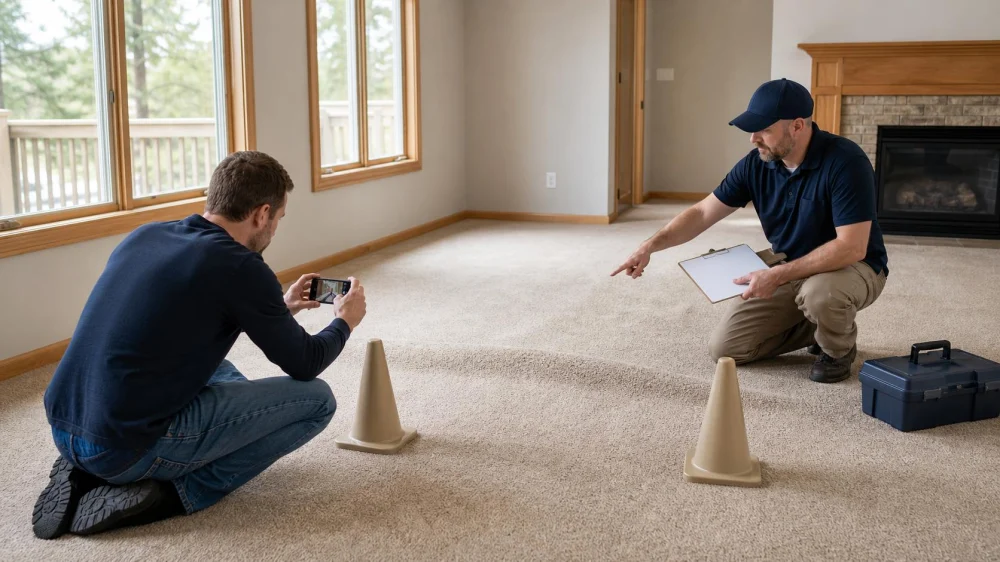
A raised ripple across fitted carpet is more than a visual nuisance. It can catch feet, interfere with doors and furniture, and worsen when traffic pushes the carpet sideways. Mark the area, keep people away, photograph the pattern, review installation and warranty records, and contact the retailer or qualified installer. Do not cut, glue, heat, soak, or attempt to stretch wall-to-wall carpet with improvised tools.
Quick answer
Place a visible barrier around the wrinkle, reroute foot traffic, and improve lighting. Photograph it from floor level and above with a ruler nearby but not pressing the carpet. Record when it appeared, room conditions, cleaning, moves, leaks, and installation date. Call the original retailer or installer when possible and ask whether inspection, power stretching, seam work, tack-strip repair, or another remedy is appropriate.

Make the area safer
Keep children, older adults, pets, and anyone with limited vision or mobility away from the raised area. Move lightweight furniture only if it can be done without dragging across the ripple. Do not cover the problem with a loose rug, mat, cardboard, or tape that creates another edge.
If the wrinkle blocks an exit, catches a door, or crosses a required accessible route, treat service as urgent. Use another safe route and tell household members, guests, cleaners, and contractors about the hazard.

Ebby's Finishing Touches
20256 Point Lookout Rd A, Great Mills, MD 20634, USA
Document the pattern
Take wide photos showing walls, doorways, seams, vents, and furniture, then low-angle photos showing height and direction. Record approximate length, width, and location. Do not stand on the crest or pull it flat for measurement.
Note whether it changes with temperature or humidity, appears only after vacuuming, follows a seam, starts near a transition, or affects several rooms. Save videos of movement under ordinary walking only when safe.
Review recent changes
List heavy furniture moves, rolling loads, renovation work, water extraction, professional cleaning, seasonal humidity, HVAC changes, door trimming, baseboard work, or new transitions. Do not assign blame; accurate timing helps the inspector distinguish tension, backing, installation, moisture, and traffic factors.
Record how furniture was moved and whether sliders, dollies, or dragging were used. A heavy object pulled across carpet can create localized stress, while broad rippling may have another cause.
Check edges without pulling
From a standing or kneeling position that does not stress your body, look for carpet detached at a wall, transition, stair, closet, or doorway. Do not lift the edge, touch tack strips, insert tools, or pull on loose yarn.
Check whether a transition strip is loose, sharp, or elevated and keep people away if it is. Photograph baseboards and door clearances. A professional needs the whole room layout to plan safe tension and attachment.
Look for moisture clues
Odor, staining, cool dampness, discoloration, swollen baseboards, or a recent plumbing or weather event can indicate moisture. Do not use a household heater, fan pointed into a wall cavity, or extra cleaning solution to dry an unknown source.
Stop the leak when safely possible, protect people from electrical hazards and contamination, and call the appropriate water-damage or plumbing professional. Carpet may need lifting and drying under controlled conditions; restretching over damp materials can trap a larger problem.
Check warranty records
Gather the sales order, product name, installation date, room measurements, cushion specification, installer record, cleaning receipts, and photos from completion. Review both product and installation warranties because they may cover different issues and require prompt notice.
Before authorizing another contractor, ask whether independent work could affect coverage. Submit the location, timeline, and images in writing, retain the case number, and request the inspection findings and proposed scope.
Understand professional repair
A qualified installer may use a power stretcher and approved attachments to restore tension, then trim and secure edges. The repair may require moving furniture, opening a seam, replacing damaged tack strip, or addressing a transition. A knee kicker alone is not a substitute for proper room stretching.
Ask how seams, pattern alignment, vents, baseboards, doors, and adjacent flooring will be protected. After work, inspect the entire room under good light, walk normal routes, test doors, and obtain a written service record.
Plan prevention
Use trained movers and proper sliders or lifting equipment for heavy objects. Match vacuum settings to pile height, control indoor humidity within manufacturer guidance, and respond quickly to water. Avoid repeated rolling loads unless the carpet and cushion are designed and protected for them.
Keep installation, cushion, and warranty information together. Photograph the finished room so later changes are easier to compare. Report early rippling rather than waiting until folds become sharp or backing is damaged.
Frequently asked questions
Can furniture flatten a ripple?
No reliable repair comes from weighting it, and furniture can hide or worsen the hazard.
Should I tape it down?
No. Tape can damage fibers, leave residue, and create another trip edge.
Can I rent a stretcher?
Wall-to-wall carpet repair requires skill, sharp tack-strip awareness, and room planning; use a qualified professional.
What if the carpet is damp?
Address the source and safe drying before considering tension repair.
Next steps
Barrier the area, photograph the full pattern, list recent changes, gather warranty records, and contact the retailer or qualified installer. Ask for a written diagnosis and scope, then verify the completed room, doors, seams, and transitions.


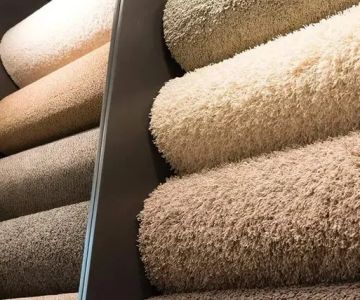
 Norman Carpet & Flooring4.0 (224 reviews)
 ProCarpet, Inc.4.0 (26 reviews)
 Annamarie Amore Interiors, Inc. d/b/a AAI Flooring4.0 (29 reviews)
 Jafri Oriental Rugs Ltd4.0 (98 reviews)
 Mid-Hudson Floor & Wall CO.4.0 (20 reviews)
 RKM Flooring Solutions with Beantown Tile4.0 (44 reviews)
 Carpet Pad Guide: Density, Thickness, and Room Fit
 How to Select the Right Carpet for Your Living Space
 How to Match Your Carpet with Your Wall Color
 What Colors Designers Are Choosing for Carpet in 2026 | CarpetHub
 How to Style Your Home with Luxury Carpets
 Carpet or Hardwood? How to Choose the Right Flooring for Your Home