

Carpet Stair Runner: Measure, Fit, and Plan Installation
Table of contents
Quick answer
A carpet stair runner should be planned around the actual tread, riser, nose, turns, landings, and exposed side margins. Measure each step, but let the installer verify quantities before ordering. Choose a construction that bends cleanly over the stair nose, approve the pattern direction and edge finish, and confirm how seams, cushion, tack strip, adhesive, and exposed edges will be handled. Inspect every step before using the stairs normally.

Island Carpet Tile & Hardwoods
MiddletownNewport CountyRhode Island
695 W Main Rd, Middletown, RI 02842, USA
Inspect the stairs first
Start with the structure, not the fabric. Walk the staircase slowly and note movement, loose boards, protruding fasteners, damaged noses, uneven treads, old adhesive, paint buildup, and squeaks. A runner is a finish layer; it should not be expected to correct a weak or changing stair assembly. Ask an appropriate building professional to evaluate structural movement or significant damage before carpet work begins.
Record the staircase type. Straight stairs are simpler than winders, pie-shaped steps, curved stairs, or stairs with an open side. Count treads and risers, photograph the top and bottom transitions, and mark landings and turns. Note whether balusters enter the tread, whether a skirt board borders the wall, and whether the stair nose returns around an exposed side. These details affect cutting, binding, seaming, and labor.
Keep the work area well lighted and clear. The U.S. Consumer Product Safety Commission includes stairs and flooring in its fall-prevention guidance, and advises keeping stairs clear and well lit. Carpet choice cannot substitute for sound handrails, adequate lighting, orderly traffic paths, or repair of a defective stair.

Measure without ordering too soon
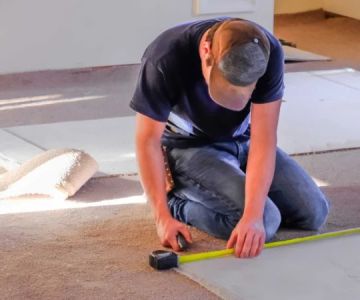
For a preliminary estimate, measure the width of every tread, the horizontal depth from the riser to the front edge, the vertical riser height, and the depth and shape of the nose. Measure each step instead of assuming the staircase is uniform. Older stairs may vary. Also record landing dimensions and the distance needed for transitions at the top and bottom.
Decide on the exposed wood margin on both sides of the runner. Centered runners usually need visually even margins, but walls and stair edges may not be parallel. The installer may recommend a layout that appears balanced from normal viewing positions rather than following one imperfect edge. Mark a proposed width with removable painter’s tape and view it from the hall, upper landing, and bottom step.
Do not calculate the final order by multiplying one step measurement alone. Installation style, pattern repeat, direction, landings, turns, seams, side returns, waste, and possible future repair material all change the quantity. Ask the retailer or installer to provide a field measure and a written takeoff. Confirm who is responsible if the supplied quantity is insufficient or the dye lot changes before extra material arrives.
Choose a suitable carpet and edge finish
Tell the seller that the product will be used on stairs. Ask the manufacturer or authorized supplier whether the specific style, backing, pile, and pattern are approved for that use and what installation method preserves the warranty. A thick sample that feels luxurious on a flat floor may be difficult to form neatly around a stair nose. A loosely constructed or large-loop style may respond differently to concentrated traffic and pet claws than a dense, low-profile construction.
Look at the sample from several directions and bend it over a shape similar to the stair nose. Check whether the backing shows, the pile separates, or the pattern becomes distorted. Compare color in daytime and at night under the actual stair lighting. If the stair receives strong sunlight, discuss likely appearance changes and product guidance with the supplier.
For exposed runner edges, common finishing approaches include binding, serging, or a turned-under edge, depending on product and installer capability. Ask to see a physical sample of the proposed finish. Specify its color, width, and whether seams will be visible. Raw edges should not simply be left exposed. The Carpet and Rug Institute’s residential installation standard calls for exposed edges to be edge sealed and upholstery work to have no raw edges exposed.
Plan the visible layout
Patterned carpet needs a deliberate starting point. Ask where the central motif will sit, how it will align from step to step, and what happens at winders or a landing. A design can look centered on the first step yet drift visually if the stairs vary. Have the installer explain where pattern adjustment, additional waste, or a seam may be necessary.
Confirm pile and machine direction. CRI’s residential standard recommends installing the carpet’s machine direction along the length of the stairs and notes that most manufacturers recommend the pile direction run down the stairs. The product manufacturer and installer should make the final product-specific decision.
Photograph or sketch the approved layout. Include runner width, side margins, edge-finish color, landing orientation, and top and bottom termination. If multiple rolls or cuts will be used, confirm dye lot and pattern sequence before cutting. A few minutes spent approving orientation can prevent an expensive disagreement after installation.
Discuss the installation method
Two visible profiles are often discussed: waterfall, where carpet drops more directly from the nose to the next tread, and a more closely contoured or cap-and-band treatment around the nose and riser. The correct option depends on the carpet, stair geometry, desired appearance, and installer’s method. Ask for photographs of comparable completed work rather than relying only on the name.
Request a written scope that identifies removal and disposal of old flooring, subfloor or stair preparation, fastening or adhesive method, separate cushion if used, edge finishing, seams, furniture protection, cleanup, and touch-up responsibility. CRI 105 says the tread, riser, and stair nose should be clean, dry, and structurally sound before installation. It also provides stair-specific directions for tack strip, cushion, adhesive, seams, and exposed edges. A qualified installer should apply the current standard, product instructions, and applicable code to the actual staircase.
Keep residents and pets away during work. Ask when the stairs may be used, whether adhesive needs a cure period, and how access will be managed if the staircase is the only route to bedrooms or an exit. Do not improvise a route through an active work zone.
Complete a safety and finish check
Before normal use, inspect the runner with the installer. Look for loose edges, raised seams, ripples, gaps, exposed fasteners, inconsistent margins, pattern shifts, and areas that do not sit firmly around the nose. Check every tread and landing under strong light. If something feels unstable, stop using that section and contact the installer rather than trying to staple or glue it yourself.
Confirm that doors, gates, vents, and handrails still operate as intended. Remove tools, scraps, packaging, and protective film. Make sure stair lighting works and that no cord crosses the path. Save the product label, lot information, invoice, installation record, care guide, warranty, and photographs of the completed stairs.
Plan cleaning and future repairs
Ask for manufacturer-approved vacuum settings, spot-cleaning products, and professional cleaning intervals. A beater bar or aggressive setting may not be suitable for every pile or bound edge. Blot spills according to the care guide and avoid saturating the stair assembly. If a step becomes wet, restrict access until the carpet and underlying materials are properly evaluated and dry.
Store a labeled remnant when practical. Matching an older runner later can be difficult because inventory, dye lots, and appearance change. A remnant may help repair a damaged step, but any repair on a stair should be secure and professionally evaluated because a loose patch or edge can create a trip point.
Frequently asked questions
Should a stair runner cover the full width?
It can, but many runners intentionally leave wood visible on both sides. The appropriate width depends on the staircase, product, traffic, desired look, and installation plan. Tape out the width and have the installer verify usable margins.
Can I install a runner over damaged stairs?
Do not use carpet to hide structural movement, broken noses, protruding fasteners, or significant damage. Have the stair repaired and prepared before the finish layer is installed.
Do patterned runners require extra material?
Often they do because the installer may need material for motif placement, repeats, turns, landings, and matching. The amount is product- and staircase-specific, so obtain a professional takeoff before ordering.
When can the stairs be used?
Ask the installer. The answer depends on fastening method, adhesive, cure time, and site conditions. Keep the route closed until the installer confirms it is ready and the final inspection is complete.
What should remain after installation?
Keep the contract, product and dye-lot information, warranty, care instructions, final photos, and a labeled remnant if available. Record any approved deviations or repairs.
Sources and verification
- The Carpet and Rug Institute, Installation Standards — access point for CRI 104 and CRI 105 installation standards.
- CRI 105 Standard for Installation of Residential Carpet — stair preparation, direction, edge, seam, cushion, and installation provisions.
- U.S. Consumer Product Safety Commission, Older Adult Safety — general fall-prevention guidance, including stair lighting and clear paths.
Standards and product instructions can change. Use the current manufacturer documents, installer scope, applicable building requirements, and site conditions for the final plan.
Conclusion
A well-planned stair runner begins with sound stairs and ends with a step-by-step inspection. Document the geometry, approve width and pattern, verify the product’s stair suitability, and put installation details in writing. The goal is not only a centered strip of carpet; it is a secure, maintainable finish that works with the entire staircase.


 Frank's Carpet4.0 (56 reviews)
 Better Carpet Warehouse4.0 (52 reviews)
 HomeGoods4.0 (196 reviews)
 Elite Flooring Supply of Southampton0.0 (0 reviews)
 RFW Floor Covering3.0 (6 reviews)
 Avalon Flooring - Manalapan, NJ4.0 (177 reviews)
 Why Carpet is Still the Best Option for Bedrooms: Comfort, Style, and Durability
 How to Care for Your Carpet During the Winter Season
 Top 10 Carpet Styles Trending in 2025: From Plush to Patterned
 The Pros and Cons of Installing Carpet in Kitchens and Bathrooms
 Can Carpets Improve Your Home’s Indoor Air Quality? | CarpetHub
 Using Carpets to Define Zones in Open Floor Plans