
How to Choose Carpet Padding Without Guessing
On this page
Quick answer
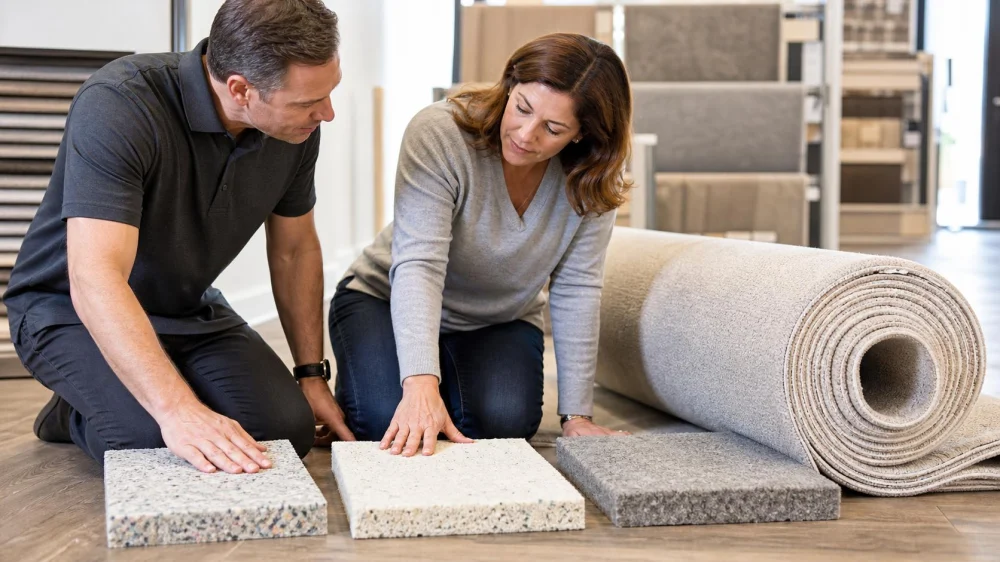
Choose carpet padding from the carpet manufacturer's written requirements first, then match cushion type, density, and thickness to the room. Thicker is not automatically better: overly soft or thick padding can let carpet flex too much, affect seams, or conflict with warranties. Ask the retailer to put the exact cushion product and specifications on the quote and confirm compatibility with stairs, radiant heat, moisture conditions, and accessibility needs.
Carpet padding, also called cushion or underlay, is the resilient layer installed between carpet and a prepared subfloor to support the carpet system.

What carpet padding does
Cushion can improve underfoot comfort, reduce impact noise, support some thermal performance, and help carpet absorb foot traffic. It cannot fix an uneven, damp, contaminated, or structurally unsound subfloor.
The carpet and cushion function as a system. A luxurious-feeling sample is not useful if its specifications are wrong for the selected carpet or application.
BCI Floor Specialists
EbensburgCambria CountyPennsylvania
3135 New Germany Rd #44, Ebensburg, PA 15931, USA
Read the important specifications
Thickness: the physical depth of the cushion. Product limits can differ for plush carpet, loop carpet, commercial styles, and stairs.
Density or firmness: how much support the cushion provides. Similar-looking pads can perform differently under load.
Material: common categories include bonded polyurethane, prime polyurethane, rubber, fiber, and specialty products. Each has different performance, cost, and installation characteristics.
Performance ratings: ask which documented residential or commercial use classification applies. Marketing names alone are difficult to compare.
Match padding to the room
- Bedrooms: comfort may carry more weight when traffic is light, within carpet limits.
- Hallways and family rooms: prioritize firm support and durability for repeated traffic.
- Stairs: use a cushion and installation method specifically approved for stairs; excessive softness can feel unstable.
- Basements: address moisture sources first. Padding marketed for moisture management does not waterproof the room.
- Radiant-heated floors: confirm the combined thermal resistance of carpet and cushion with the flooring and heating manufacturers.
- Rolling mobility devices: ask about firm, low-profile assemblies that reduce rolling resistance and meet project requirements.
Shopping checklist
- Obtain the carpet manufacturer's current cushion requirements and warranty terms.
- Ask for the cushion brand, product name, material, thickness, and density in writing.
- Confirm whether the quoted price includes removal, disposal, subfloor preparation, installation, and stairs.
- Compare equal specifications rather than color or showroom softness.
- Ask about emissions or indoor-air certifications if that matters to your household.
- Confirm compatibility with pet concerns, moisture barriers, radiant heat, and transition heights.
- Keep product labels, invoice, warranty, and installation record.
What to avoid
- Choosing the thickest cushion without checking the carpet limit.
- Accepting a quote that says only “premium pad” without measurable specifications.
- Using new padding to conceal subfloor damage, odor, or moisture.
- Assuming a built-in moisture barrier prevents spills from reaching seams, edges, or the subfloor.
- Reusing old cushion without written approval and a careful condition assessment.
Limitations and important notes
Requirements vary by carpet construction, manufacturer, installation method, building code, and warranty. The product documents and qualified installer's site assessment should control the final choice.
Suspected mold, persistent moisture, damaged subflooring, asbestos-containing materials, or other hazards require appropriate professional evaluation before flooring work proceeds.
Frequently asked questions
Is thicker carpet padding more comfortable?
It may feel softer, but excessive thickness can reduce stability and conflict with product requirements. Density and construction matter alongside thickness.
Does carpet padding make a room warmer?
It can add some thermal resistance, but performance depends on the complete assembly. This is especially important over radiant heat.
Can padding stop pet urine from reaching the subfloor?
A barrier may slow some liquid, but edges, seams, penetrations, and repeated contamination remain vulnerable. Ask how cleanup and replacement would work.
Should carpet padding be replaced with new carpet?
Often yes, because old cushion may be compressed, contaminated, incompatible, or excluded by warranty. Ask the retailer and inspect the actual condition.
Sources and evidence notes
This guide reflects common flooring-system principles: follow manufacturer limits, compare measurable cushion specifications, use firmer support in demanding applications, and correct subfloor or moisture problems before installation.
Next steps
Start with the selected carpet's requirements, define the room's demands, and compare written cushion specifications. Put the exact product on the contract so the installed system matches the decision.


 Sherwin-Williams Floorcovering Store4.0 (6 reviews)
 The Carpet Girl LLC4.0 (27 reviews)
 Faber Rug Co4.0 (16 reviews)
 Ramtown Carpet One Floor & Home5.0 (43 reviews)
 Long Island Paneling, Ceilings & Floors4.0 (41 reviews)
 Somers Floors & More4.0 (9 reviews)
 What Colors Designers Are Choosing for Carpet in 2026 | CarpetHub
 Carpet vs. Hardwood: Which Flooring Option Is Right for You? | CarpetHub
 How to Choose the Right Carpet Color for a Cozy and Inviting Home
 Tips for Picking the Right Carpet for High-Traffic Areas in Your Home
 Top 10 Carpet Styles Trending in 2025: From Plush to Patterned
 How to Find Carpet Deals Near You and Save More