
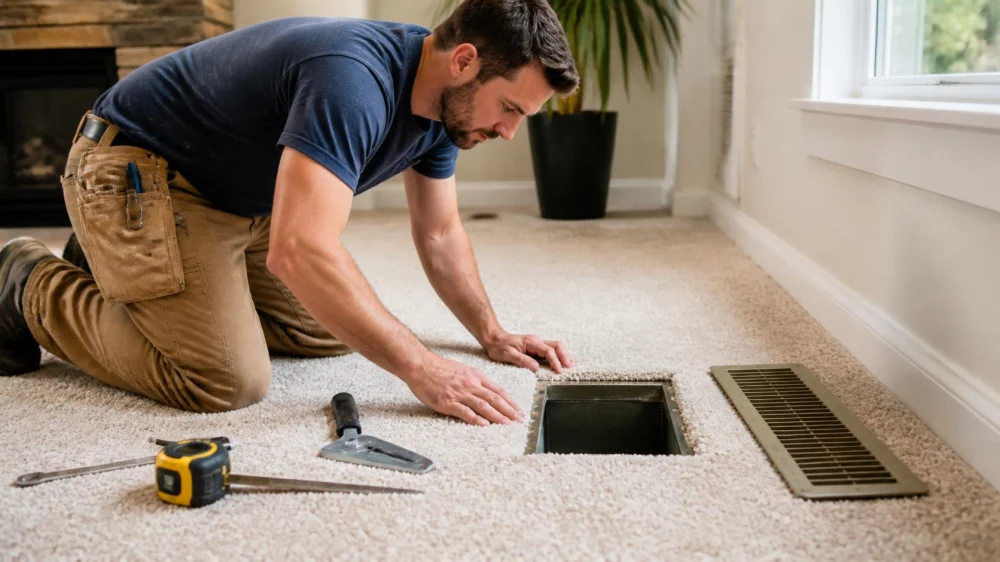
Carpet Around Floor Vents: Keep Airflow and Access Clear
Table of Contents
Quick answer
Carpet should finish neatly around a floor vent without covering the opening, trapping the grille, or leaving loose fibers at the edge. Confirm the grille can be removed, the damper can move if present, and the carpet does not curl into the air path. After installation, compare airflow with similar open vents and contact the flooring or HVAC professional if performance changes.
Why the details matter
A floor register is both an air opening and a service point. Carpet that overlaps the duct opening may restrict air, shed fibers into the grille, or make routine cleaning difficult. An opening cut too large can expose the subfloor and create an untidy edge. A loose or raised grille may also become a trip or furniture hazard.
The best result depends on the complete floor assembly: carpet style, cushion thickness, subfloor condition, vent boot position, grille dimensions, and how the carpet is secured. Treat the register as a planned detail rather than a last-minute cut.
Check before work starts
Remove the grille only when the heating or cooling system is off and the surrounding area is safe to work on. Record its orientation, overall dimensions, and the size of the actual duct opening. Check whether the grille sits on the finished floor, drops into the duct boot, uses screws, or includes an adjustable damper.
- Look for rust, sharp metal, loose screws, or a bent grille.
- Confirm the duct boot is stable and reasonably aligned with the floor opening.
- Note nearby seams, transitions, doors, and planned furniture legs.
- Ask the installer how the carpet edge and cushion will be finished.
- Keep small parts away from children and pets.
If the opening is damaged, the boot is loose, or wiring is visible, stop and ask the appropriate professional to inspect it before carpet work continues.
Plan the opening and fit
The visible cut should follow the register footprint while leaving the air passage open. The grille flange normally covers the finished carpet edge, but it should not depend on excessive overlap to hide an oversized cut. The grille must sit flat and should not rock when lightly pressed.
Do a dry fit before final trimming. Set the grille in place without forcing it, check every side, and verify that any damper control remains reachable. Do not stuff carpet scraps or loose cushion into gaps. If the existing grille no longer fits because the finished floor height changed, use a compatible replacement selected for the duct opening and floor condition.
Keep carpet edges secure
Cut carpet can fray or unravel if the construction and edge are not handled correctly. Installation methods vary, so follow the carpet maker's instructions and the installer's approved technique. The cushion should not protrude into the duct, and fasteners or adhesives should not be placed where they can damage the duct, hidden services, or grille.
After the grille is installed, gently inspect the perimeter. Look for loose yarn, a lifted corner, exposed sharp material, or a gap large enough to catch a shoe, wheel, or pet claw. Do not pull a loose loop; isolate the area and ask the installer how it should be repaired.
Check airflow after installation
Turn the system back on only after tools, fibers, packaging, and debris are cleared. Open the register to its intended position and listen for new rattling or whistling. Hold a lightweight tissue near, not inside, the grille for a simple directional check. Compare the result with another similar open register serving the same area rather than relying on a precise measurement.
A noticeable reduction can have several causes, including a closed damper, debris, a shifted grille, carpet overlap, or a broader HVAC issue. Do not reach into the duct or dismantle the system. Ask an HVAC professional to investigate persistent or room-wide comfort problems.
Preserve access for maintenance
The grille should remain removable for cleaning and inspection. Avoid placing a heavy cabinet, rug pad, or fixed furniture directly over it. If furniture must be nearby, maintain the clearance recommended by the HVAC equipment or grille manufacturer and verify that air can circulate freely.
Vacuum the grille with the system off using an appropriate attachment, following the vacuum and flooring care instructions. Lift the grille only if it is safe and designed for removal. Photograph the finished opening and keep the carpet, grille, and installer details with household maintenance records.
Watch for warning signs
- The grille rocks, lifts, or has a sharp exposed edge.
- Carpet or cushion is visible inside the air passage.
- Loose fibers repeatedly collect at the opening.
- A new whistle, rattle, burning odor, or unusual heat appears.
- The room becomes harder to heat or cool after the flooring change.
- Moisture, staining, pests, or damaged duct material is visible.
Turn the system off and seek qualified help if there is smoke, a burning smell, exposed electrical material, or an unsafe opening. Flooring installers can address finish and edge concerns; HVAC professionals can assess airflow, ducts, and equipment.
Practical checklist
- Photograph and measure the existing grille and opening.
- Inspect the boot, grille, damper, and surrounding subfloor.
- Confirm the planned carpet and cushion height.
- Agree on the edge-finishing method with the installer.
- Dry-fit the grille before final trimming.
- Clear debris and confirm the grille sits flat.
- Test damper movement and compare airflow.
- Record any concern before furniture returns to the room.
FAQ
Can carpet cover part of a floor vent?
It should not cover the designed air opening. Even a partial overlap can catch debris and may affect airflow. Ask the installer to correct the fit rather than trimming casually after installation.
Should the vent grille be level with the carpet?
It should sit stable and appropriately supported by the finished floor detail. Exact height depends on the grille and carpet system, but it should not rock, expose sharp edges, or create an obvious catching point.
Can I seal a gap with tape or loose carpet?
That is not a durable finish and may obstruct access or airflow. Have the opening assessed and use a compatible grille or professionally corrected flooring detail.
Who should fix reduced airflow after new carpet?
Start by asking the flooring installer to confirm the opening is clear and the grille fits. If the issue persists or involves the duct or HVAC system, contact a qualified HVAC professional.
Next steps
Before installation, document the vent and agree on the finished edge. Afterward, confirm a flat removable grille, a clear opening, normal damper movement, and comparable airflow. Photograph the completed detail and resolve loose edges, unusual noise, odors, or comfort changes promptly.
Evidence note: This guide uses conservative installation and maintenance principles. Product-specific clearance, fastening, cleaning, and warranty instructions from the carpet, cushion, grille, and HVAC manufacturers take priority.


 Town & Country Floor Covering3.0 (7 reviews)
 Chestnut Bargain Center4.0 (25 reviews)
 The Wood Floor Store2.0 (2 reviews)
 Valu Home Centers4.0 (508 reviews)
 Carpets 46 Hardwood Floor Installation5.0 (32 reviews)
 Allied Flooring, Paint and Design4.0 (108 reviews)
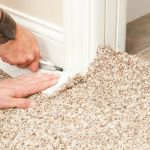 What to Expect When Installing Carpet in Your Home – A Step-by-Step Guide
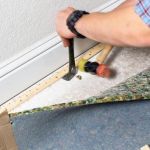 How to Fix Gaps Between Carpet and Walls After Installation
 How to Test Carpet Samples at Home Before Buying
 Carpet vs. Hardwood: Which Flooring Option Is Right for You? | CarpetHub
 How to Remove Paint from Carpet Without Ruining It | Expert Carpet Cleaning Tips
 What Is Frieze Carpet and Why You Should Consider It for Your Home