
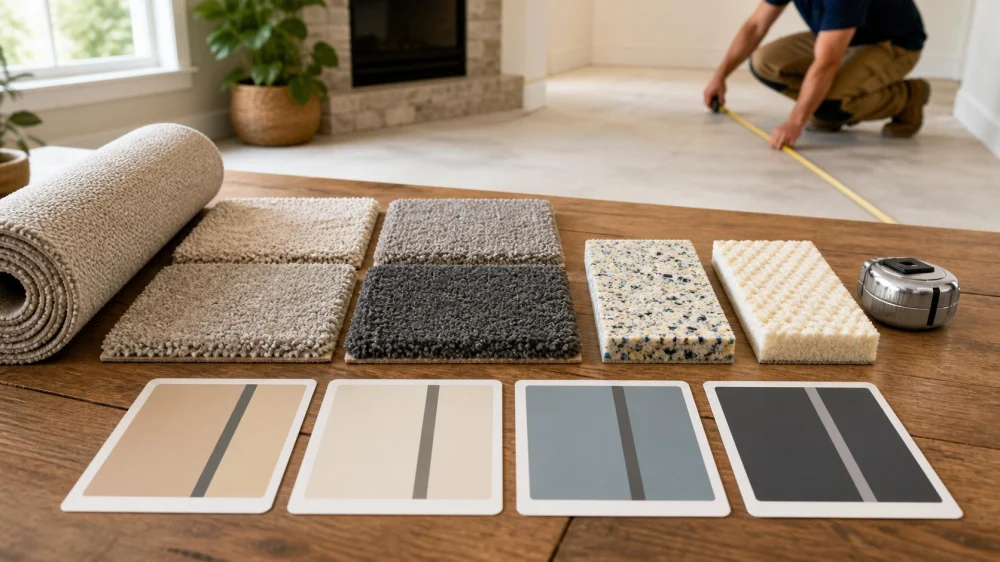
Carpet Quote Comparison: Match Material, Pad, Labor, and Waste
Article guide
Quick answer
Compare carpet quotes only after every bidder prices the same rooms, carpet specification, pad, removal work, furniture handling, transitions, stairs, and installation details. Separate square footage from waste allowance, note every exclusion, and calculate the complete installed price. A low total is not a useful bargain if the quote omits pad quality, floor preparation, disposal, or other work you will still need.

Normalize the scope first
Two carpet estimates can look similar while describing different projects. Before comparing totals, make a room list and give each retailer or installer the same information. Include closets, stairs, halls, doorways, built-ins, furniture that cannot be moved easily, existing floor coverings, and any known subfloor concerns.
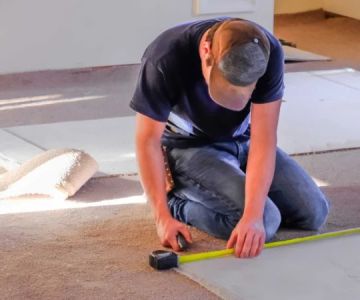
Ask each bidder to show measurements or provide a room-by-room quantity breakdown. Confirm whether the quoted area includes closets and whether thresholds, floor vents, fireplaces, and oddly shaped sections affect the layout. If one company measured in person and another used only homeowner dimensions, label that difference rather than treating the numbers as equally final.
A useful scope line should say what is furnished, what is installed, what is removed, and what remains the homeowner's responsibility. Verbal assurances should be added to the written quote or contract.

Compare carpet and pad specifications
Start with an exact product match. Record the manufacturer, collection, style or product number, color, fiber type, construction, and stated warranty for each carpet. A color name alone is not enough: products with a similar appearance can differ in construction, performance guidance, and care requirements.
Then compare the cushion or pad as its own product. Note the type, thickness, density or other supplier specification, price, and warranty compatibility. Ask whether the chosen pad fits the carpet manufacturer's requirements and the conditions in the room. If a quote says only “premium pad,” request the actual product details before treating it as equivalent to another bid.
Keep optional upgrades in separate rows. Stain treatments, moisture barriers, upgraded cushion, and extended service plans should not be blended into the base carpet price if you want a clean comparison.
Read the labor lines
Installation prices may bundle several tasks or list them individually. Look for:
- delivery and handling;
- moving and returning furniture;
- removing and disposing of existing carpet and pad;
- pulling staples or tack strip and installing replacements where needed;
- basic subfloor inspection and preparation;
- stairs, landings, closets, seams, transitions, and door trimming;
- baseboard or quarter-round work;
- cleanup, haul-away, and final walkthrough.
Ask how unforeseen subfloor repairs are authorized and priced. A quote may reasonably exclude conditions hidden under existing flooring, but it should explain the approval process before extra work begins. Also confirm who performs the installation, who handles callbacks, and how workmanship coverage differs from the carpet manufacturer's product warranty.
Check quantity and waste
Carpet is supplied in fixed roll widths, so the purchased quantity may exceed the measured floor area. Room shapes, pattern matching, seam placement, direction of pile, stairs, and defects can change how much material is required. “Waste” is therefore not a single percentage that fits every home.
Ask the estimator to separate net floor area from ordered quantity and explain the layout when estimates differ substantially. A higher quantity is not automatically padded, and a lower quantity is not automatically efficient. The important question is whether the plan supports practical seams, consistent direction, and the specified product width or pattern repeat.
Clarify ownership of usable remnants. If you want leftover carpet for future repairs or small projects, put that request in writing and ask the installer to label or roll it safely.
Quote comparison checklist
- Create one room-and-task scope for every bidder.
- Match the exact carpet product and color.
- Record the exact pad specification separately.
- Compare net measured area, ordered area, roll width, and waste explanation.
- List removal, disposal, furniture, stairs, transitions, and floor preparation.
- Mark allowances, optional upgrades, and excluded work.
- Confirm taxes, delivery, deposit, payment schedule, and quote expiration date.
- Check installer credentials and insurance as required locally.
- Compare product warranties with workmanship or installation coverage.
- Review the written contract before work starts and keep copies of all records.
For a simple spreadsheet, use one column per bidder and one row per specification or task. Add a final “unknown” row. Unanswered questions are part of the comparison because they can become cost or scheduling surprises later.
Limitations and local details
Pricing, licensing rules, cancellation rights, deposit limits, taxes, and contract requirements vary by location and project. Product availability and dye lots can also change before an estimate expires. This guide is a comparison framework, not a substitute for the manufacturer's installation instructions, a site inspection, or local legal advice.
Moisture, damaged subfloors, asbestos-containing materials, lead hazards, radiant heat, or other special conditions may require qualified assessment beyond routine carpet installation. Do not ask an installer to conceal an unsafe or unresolved condition merely to preserve the quoted total.
Frequently asked questions
Should I choose the lowest carpet quote?
Not from the total alone. First verify that materials, quantities, labor, preparation, disposal, warranties, and payment terms match. A more complete quote may cost less than a low bid followed by several change orders.
Why do two estimators order different square footage?
They may use different seam layouts, roll widths, pile directions, pattern repeats, or allowances for irregular rooms and stairs. Ask each estimator for the net area, ordered quantity, and layout rationale.
Is carpet pad included in the square-foot price?
Sometimes, but never assume. Request the pad's product specification and separate material and labor charges so you can compare equivalent systems.
What should happen if hidden subfloor damage appears?
The written agreement should describe how the installer documents the condition, presents options and prices, and obtains approval before additional work. Avoid open-ended verbal authorization.
How many written estimates should I get?
The Federal Trade Commission's consumer guidance recommends getting multiple written estimates; a related FTC home-repair resource specifically suggests three. The useful number may depend on local availability, but each estimate should describe the work, materials, timing, and price clearly.
Evidence notes
The Federal Trade Commission's home improvement guidance recommends multiple written estimates and says an estimate should describe the work, materials, completion date, and price. It also advises consumers to read the contract carefully, capture promises in writing, avoid full payment up front, and keep project records.
The FTC's shorter home repair scam checklist advises checking licenses and insurance, getting three written estimates, and reviewing and signing a written contract before work begins. State and local requirements should still be checked for the particular project.
Conclusion
A fair carpet quote comparison begins with an identical scope, not a row of bottom-line prices. Match the carpet and pad, separate quantities from waste, account for every labor task, and record exclusions and unknowns. Once the bids describe the same finished job, you can weigh price alongside installer qualifications, schedule, warranty support, and the clarity of the written agreement.


 Ollie's Bargain Outlet4.0 (776 reviews)
 Bedford Carpet One Floor & Home4.0 (15 reviews)
 FloorMax4.0 (35 reviews)
 Family Carpets of New Jersey3.0 (5 reviews)
 Dalene Flooring Carpet One4.0 (42 reviews)
 The Home Depot4.0 (1356 reviews)
 Best Carpet Choices for Homes in Hot and Dry Climates
 The Ultimate Guide to Carpet Styles
 How to Choose Carpet That Matches Your Home’s Personality and Aesthetic
 The Best Carpet Styles for Luxury Homes and High-End Interiors
 Carpet vs. Hardwood: Which Flooring Option Is Right for You? | CarpetHub
 Carpet Purchasing Secrets from Interior Designers