
Carpet Under a Dining Table: Plan Chairs, Edges, and Spills
On this page
Quick answer
Measure the table in every normal configuration, then pull each chair back far enough for a guest to stand and mark the full movement zone. Keep all chair legs supported through that motion without pushing the carpet edge into a doorway, vent, cabinet, or tight traffic lane. Choose a stable, cleanable construction and compatible pad, test vacuum access, and write a spill plan before purchase.
This guide applies to dining-room carpet planning and area rugs in U.S. homes. Product warranties, flooring type, room geometry, accessibility, chair design, pets, children, and cleaning methods vary.
Measure the real dining footprint
The dining footprint is the table plus every chair’s usable pullback and walking space in the table’s largest routine configuration. Measuring only the tabletop can leave rear chair legs catching an edge.
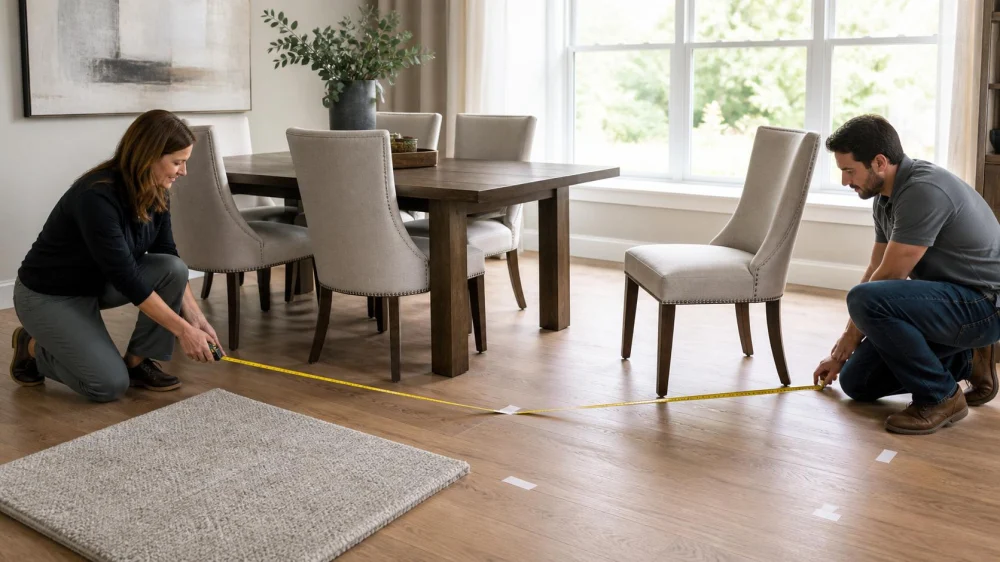
Extend leaves or drop-leaf sections as they are used for guests. Place the actual chairs, including armchairs, high chairs, mobility seating, or benches. Pull them out from all sides and mark the farthest leg position with removable tape.
Also mark doors, floor vents, radiators, built-ins, serving furniture, outlets, island clearances, and the main path between kitchen and table. A rug that fits the table may still crowd a doorway or create a narrow service route.

Allied Flooring and Design Center
East LongmeadowHampden CountyMassachusetts
55 N Main St, East Longmeadow, MA 01028, USA
Choose pile and construction
Lower, denser surfaces often allow chair legs to move more predictably and make crumbs easier to reach than deep, loose pile. Flatweave, low-cut pile, and other constructions each differ in texture, edge behavior, cleaning, durability, and comfort.
Loop construction can interact with chair feet, pet claws, or damaged glides. Plush pile can show dents or make chairs harder to slide. Natural and synthetic fibers differ in stain response, moisture tolerance, shedding, and approved cleaners.
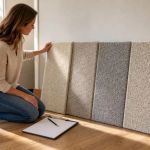
Take a sample home when possible. Test it under the actual chair leg and glide, in daytime and evening light, and with the vacuum or cleaning tools you plan to use. Review warranty and care instructions before judging a product only by softness.
Stabilize edges and chairs
Use a pad or underlay approved for both the rug and underlying floor. The wrong material can transfer color, trap moisture, stick, or damage a finish. Cut or install it so it supports the rug without extending beyond the edge.
Check that edges lie flat and corners do not curl. Avoid placing a rug edge exactly where a chair’s rear legs stop or where people turn sharply. Thin transitions can still be noticeable to a cane, walker, wheelchair, small child, or guest carrying dishes.
Inspect chair glides. Missing, sharp, dirty, or uneven glides can snag fibers, leave marks, or destabilize a chair. Choose a floor-compatible glide and maintain it rather than applying an untested adhesive piece.
Plan for spills and cleaning
- Keep the product’s approved spot-cleaning instructions accessible.
- Identify which foods, dyes, oils, waxes, and drinks are common in the household.
- Use washable placemats or chair-protection methods that do not create a new trip hazard.
- Blot and treat spills only with the product-approved method; avoid aggressive rubbing.
- Test any cleaner in an inconspicuous location as directed.
- Keep moisture from soaking through to wood, laminate, or another moisture-sensitive floor.
- Plan how the rug can be lifted, professionally cleaned, or dried when needed.
“Stain resistant” does not mean stain proof or compatible with every cleaner. Ask what the warranty requires for spills and professional cleaning.
Test the full layout
- Outline the proposed size. Use removable tape or paper without damaging the floor.
- Set the largest table. Include leaves, place settings, and normal centerpieces.
- Move every seat. Sit, pull back, stand, and walk behind each chair.
- Serve the table. Carry an empty tray through the normal kitchen route.
- Test access. Open doors, cabinets, and vents and move mobility equipment through the space.
- Clean the mock area. Confirm vacuum head, attachments, and hands can reach under furniture.
- Review from the room. Check visual balance only after movement and safety work.
Dining-carpet checklist
- Table measured in its largest routine configuration
- Every chair and bench pullback zone marked
- Doorways, vents, cabinets, and traffic routes clear
- Pile and construction tested with actual chair glides
- Pad compatible with rug and underlying floor
- Edges flat and outside stopping or turning zones
- Vacuum and spot-cleaning access confirmed
- Care and warranty instructions saved
- Spill and drying plan ready
Limitations and important notes
- There is no single rug size that fits every table, chair, and room.
- Do not block floor vents, heat sources, required clearances, or exits.
- Loose edges and incompatible pads can create falls or floor damage.
- Heavy tables may require professional movement and floor protection.
- Follow manufacturer guidance for cleaning, stain treatment, moisture, and warranty care.
Frequently asked questions
How far should a rug extend beyond the table?
Extend it far enough that all chair legs remain supported during real pullback, then confirm the outline fits doors and traffic. Measure the actual furniture rather than using one universal number.
Is low pile always best?
It is often easier for chairs and cleaning, but fiber, weave, glides, comfort, durability, and care also matter. Test a sample.
Can I put a rug over wall-to-wall carpet?
Only with a stable setup and pad designed for that surface. Layering can move, ripple, or create raised edges, so ask a flooring professional.
Should the table be centered on the rug?
Usually the movement zone matters more than perfect visual centering. Offset may be necessary for a doorway or sideboard while still supporting chairs.
What if one chair crosses the edge?
Resize or reposition the rug, table, or seating. A chair repeatedly catching an edge can damage the rug and destabilize the user.
Sources and evidence notes
This article reflects general interior and flooring planning practice: measure moving furniture, protect walking routes, match pile and pad to use, test samples, preserve cleaning access, and follow product care instructions. Exact size and construction depend on the actual room and household.
Next steps
Set the table at its largest normal size, pull every chair back, and tape the full footprint. Walk the service route and open every nearby door and cabinet. Take the outline dimensions and a chair-glide photo to a carpet store, test samples at home, and select only after the pad, care, and edge plan work on the existing floor.


 Town & Country Floor Covering3.0 (7 reviews)
 Chestnut Bargain Center4.0 (25 reviews)
 The Wood Floor Store2.0 (2 reviews)
 Valu Home Centers4.0 (508 reviews)
 Carpets 46 Hardwood Floor Installation5.0 (32 reviews)
 Allied Flooring, Paint and Design4.0 (108 reviews)
 What to Expect When Installing Carpet in Your Home – A Step-by-Step Guide
 How to Fix Gaps Between Carpet and Walls After Installation
 How to Test Carpet Samples at Home Before Buying
 Carpet vs. Hardwood: Which Flooring Option Is Right for You? | CarpetHub
 How to Remove Paint from Carpet Without Ruining It | Expert Carpet Cleaning Tips
 What Is Frieze Carpet and Why You Should Consider It for Your Home