
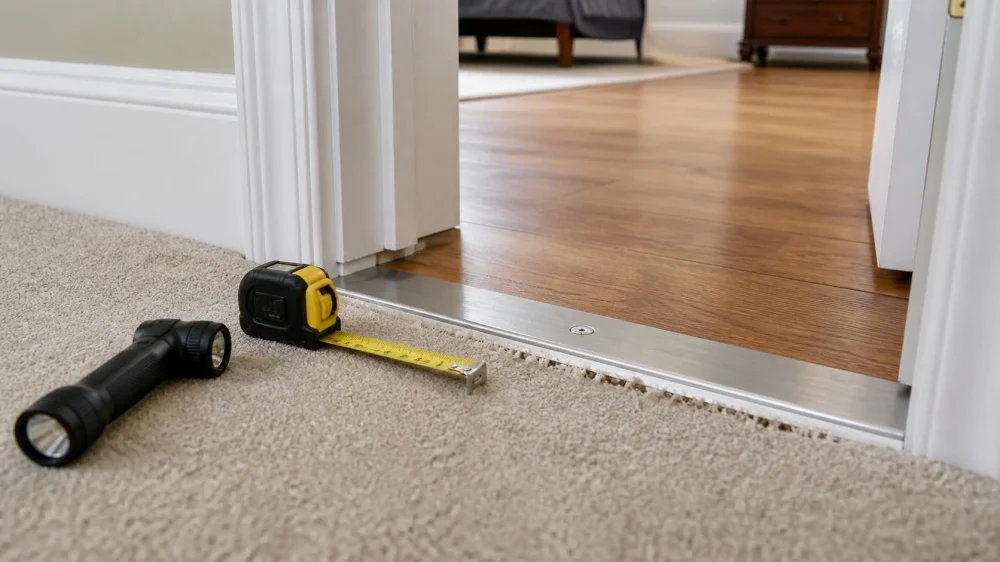
Carpet Edge Fraying at a Doorway: Protect the Area and Inspect the Transition
On this page
Quick answer
When carpet begins fraying at a doorway, reduce traffic, keep loose yarn out of wheels and paws, photograph the edge, and inspect whether the carpet is pulling from the tack strip or transition. Do not tug strands, cut structural yarn blindly, hammer fasteners, or glue the edge down before the cause is known. An installer can check stretch, backing, seam sealer, transition fit, floor-height difference, door clearance, and subfloor attachment, then make a durable repair.

Why it matters
Doorways concentrate foot traffic, vacuum contact, rolling loads, and movement between flooring materials. A loose transition or poorly secured edge can progress into unraveling and a trip hazard.
This United States flooring guide is general. Carpet construction, warranty, installation method, transition type, subfloor, accessibility, moisture, and door rating vary.
Hale's Floor Covering, LLC
East LymeSoutheastern Connecticut Planning RegionConnecticut
215 Main St Suite A, Niantic, CT 06357, USA
Practical checklist
- Mark the affected length and photograph it from above and floor level.
- Check for sharp metal, loose screws, raised edges, exposed tack, and tripping.
- Note vacuum, wheelchair, cart, pet, and door-bottom contact.
- Compare floor heights and whether the transition rocks or flexes.
- Look for moisture, staining, seam opening, or carpet movement.
- Find product, installer, warranty, and prior repair records.
- Temporarily route traffic away without creating a new obstruction.
Step-by-step plan
- Stop pulling or repeatedly vacuuming the loose edge and keep the area well lit.
- Use a visible temporary boundary that does not tape directly to delicate pile or block egress.
- Photograph the door open and closed, including clearance and adjacent floors.
- Ask the installer to identify whether yarn, backing, seam, stretch, tack, or transition failed.
- Approve a repair that secures the carpet edge and transition without exposed sharp parts.
- Check door swing, threshold height, mobility-device passage, and cleanability after repair.
- Save repair details and re-inspect after routine traffic and vacuuming.
Keep location, measurements, photos, traffic pattern, door and vacuum contact, moisture observations, carpet and transition details, warranty, installer diagnosis, repair materials, and final test.
Limits and warning signs
Trimming the visible fuzz may improve appearance but will not secure a loose backing or transition. Adhesive alone may complicate warranty work or stain fibers.
Block the area and arrange prompt repair for exposed tack, sharp metal, a lifted transition, rapidly widening damage, or any trip risk. Investigate moisture before closing the edge.
Frequently asked questions
Can I cut the loose fibers?
Do not cut until an installer identifies whether they are surface fuzz or part of a structural row.
Why is the damage only at the doorway?
Traffic, height change, transition movement, door clearance, and vacuum impact concentrate there.
Can I glue the carpet under the strip?
Use the method approved for the carpet, transition, subfloor, and warranty; improvised glue can fail or stain.
Should the transition feel loose?
No. Movement, sharpness, or lift should be assessed and secured by a qualified installer.
Sources and evidence
The guide applies flooring-transition, trip-prevention, carpet-construction, warranty, moisture, and accessibility principles: protect the area, diagnose the whole edge, avoid irreversible trimming, and verify the repaired passage.
Conclusion and next steps
Reduce traffic, document the full doorway and contact pattern, check for sharp or raised parts and moisture, then have the installer repair the carpet and transition as a system and retest clearance.



 Beach Flooring Designs5.0 (74 reviews)
 Essex Flooring Connection Inc.4.0 (74 reviews)
 Willis & Co Floor Covering5.0 (4 reviews)
 Carpets With a Twist5.0 (14 reviews)
 New York Expo Carpet & Flooring4.0 (6 reviews)
 Cut-Rite Carpets & Design Center4.0 (19 reviews)
 The Best Carpets for Transforming Your Living Room into a Cozy Retreat
 How to Add Value to Your Home with High-Quality Carpets
 The Best Carpet for Creating a Cozy Winter Home
 How to Make Your Carpet Last Longer with Proper Care and Maintenance Tips
 Tips for Picking the Right Carpet for High-Traffic Areas in Your Home
 Why Carpet is the Best Option for Bedrooms: Comfort and Warmth | Cozy Bedroom Flooring