
Carpet Static Electricity: Humidity, Fibers, and Electronics
On this page
Quick answer
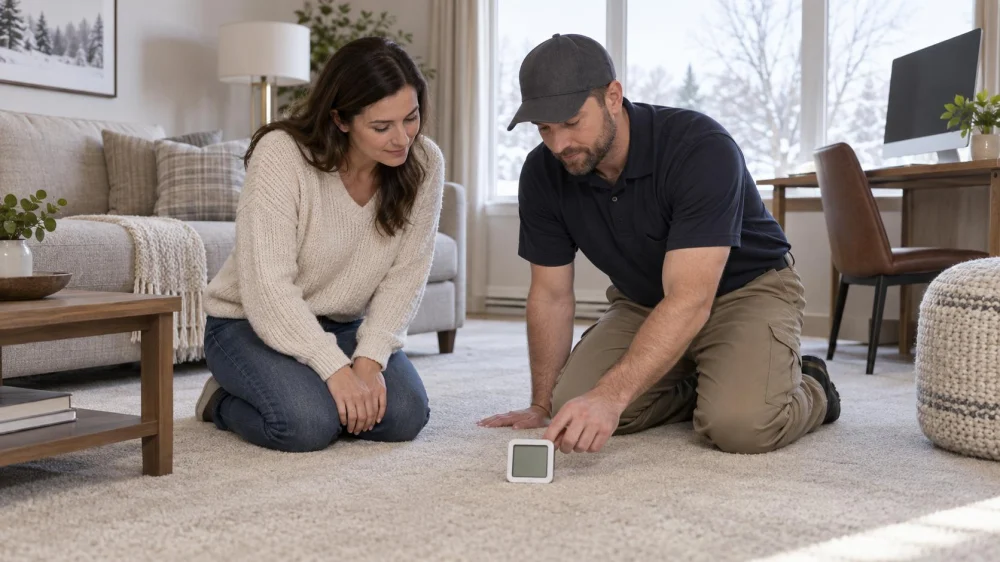
Frequent carpet static often increases in dry indoor air and can vary with carpet fiber, footwear, clothing, and walking pattern. Record when and where shocks occur, check indoor humidity with a reliable meter, and follow the carpet and electronics manufacturers' guidance. Add moisture cautiously, never exceed safe humidity limits, and avoid spraying unapproved products on carpet or equipment.

Identify the pattern
Note the room, weather, heating schedule, shoes, clothing, and surface crossed before each shock. Check whether it occurs only after walking on carpet, at one doorway, or when touching a particular appliance. This separates a repeatable static pattern from a possible electrical fault.
Photograph the carpet label and keep installation records. Fiber type, construction, backing, treatment, soil, and wear can affect performance, so a carpet professional may need the exact product information.
Normandy Carpet
GaithersburgMontgomery CountyMaryland
7621 Rickenbacker Dr STE 100, Gaithersburg, MD 20879, USA
Check humidity carefully
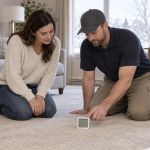
Use a hygrometer away from direct sunlight, supply vents, kitchens, and bathrooms. Compare several readings over a few days rather than reacting to one number. Dry winter heating can coincide with more static.
The U.S. Environmental Protection Agency notes that moisture from a humidifier can reduce common dry-air nuisances such as static electricity, but advises not humidifying above 50 percent relative humidity. Excess moisture can support biological growth and damage building materials.
Review carpet and footwear
Try a different pair of shoes and avoid dragging feet. Compare synthetic and natural clothing layers, and ask the carpet manufacturer whether the product has antistatic features or care restrictions.
Vacuum with the approved settings and keep the carpet free of residue. Do not assume that more cleaning solution will reduce static; residue can change appearance, attract soil, and affect warranties.
Protect sensitive electronics
Follow the device manufacturer's electrostatic-discharge instructions before handling internal components, memory, circuit boards, or connectors. Work in the recommended area and use approved grounding or antistatic equipment when specified.
Do not use a radiator, plumbing, outlet plate, or improvised wire as a ground. If a device behaves abnormally after a discharge, stop, disconnect it as directed, and contact qualified support.
Use treatments cautiously
Before applying an antistatic carpet product, confirm compatibility with the carpet fiber, dye, backing, stain treatment, warranty, indoor-air requirements, children, and pets. Read the full label, ventilate as directed, and test only in a hidden area.
Never spray near energized equipment, outlets, flames, or hot surfaces. A professional can recommend a product-specific approach when static persists despite reasonable humidity and care.
Important safety limits
A brief snap after walking differs from repeated sparks at one switch, burning odor, warmth, tingling from an appliance, visible arcing, or tripped protection. Stop using the affected circuit or device and contact a qualified electrician or emergency service as appropriate. Do not treat a possible wiring fault as carpet static.
Frequently asked questions
Does dry air always cause carpet static?
It is a common contributor, but materials, footwear, movement, and equipment also matter.
Should I raise humidity as high as possible?
No. EPA guidance says not to exceed 50 percent relative humidity when using a home humidifier.
Can I spray fabric softener on carpet?
Do not improvise. It may leave residue, alter appearance, or conflict with the warranty.
When should I call an electrician?
Call for shocks linked to one device or circuit, burning odor, heat, visible arcing, repeated trips, or any doubt about electrical safety.
Sources and evidence notes
The EPA's home humidifier guidance connects dry air with static electricity while warning against indoor relative humidity above 50 percent and explaining cleaning and moisture risks.
Next steps
Log the pattern, measure humidity, test a simple footwear change, and review carpet and device instructions. Use only approved products and bring electrical warning signs to a qualified professional.


 Airpark Carpet5.0 (2 reviews)
 Normandy Carpet5.0 (389 reviews)
 FloorMax4.0 (35 reviews)
 All County Carpet5.0 (5 reviews)
 HomeGoods4.0 (345 reviews)
 Ollie's Bargain Outlet4.0 (445 reviews)
 Carpet Sun Fading: Light Zones, Windows, and Protection
 Carpet Static Electricity: Humidity, Fibers, and Electronics
 Carpet Service Access Handoff: Keys, Codes, Privacy, and Records
 Carpet Service Credential Check: Verify the Right Qualification
 Area Rug Over Carpet: Grip, Curl, and Door Clearance
 Carpet Chair Mat: Check Size, Backing, Edges, and Movement