
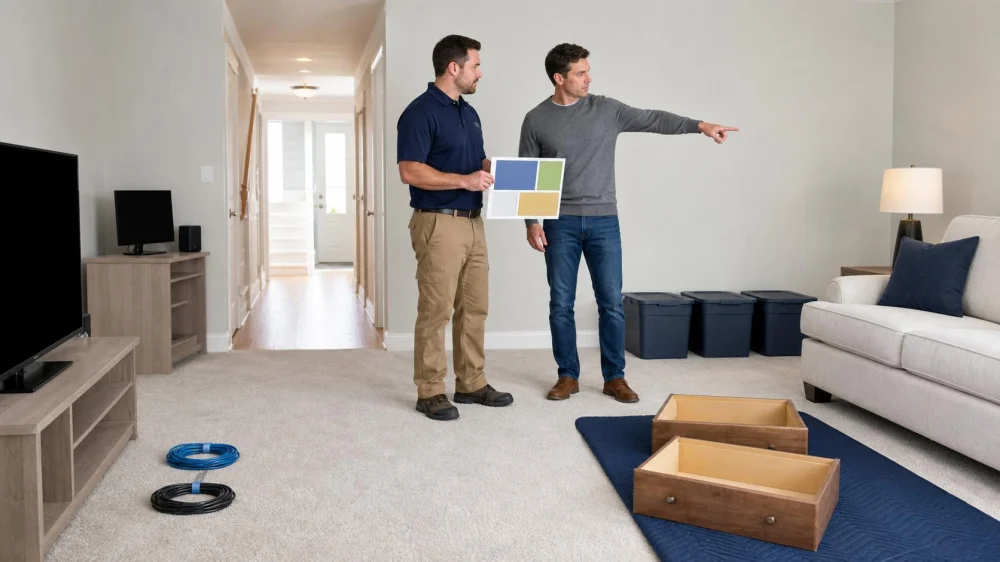
Furniture Prep for Carpet Installation: A Room-by-Room Checklist
On this page
- Quick answer
- Confirm the installer’s scope
- Create a room inventory
- Remove small and fragile items
- Disconnect electronics safely
- Plan large furniture moves
- Address specialty and heavy items
- Empty closets and built-ins
- Clear access routes
- Protect belongings from dust
- Plan for children and pets
- Prepare for room restoration
- Installation-eve checklist
- Frequently asked questions
- Next steps
Quick answer
Before carpet installation, ask in writing which furniture the crew moves, what it will not move, whether rooms must be completely empty, and what fees or liability limits apply. Remove small, fragile, valuable, personal, wall-mounted, and breakable items yourself.
Photograph each room, label cables before disconnecting electronics, empty furniture that will be moved, and arrange qualified help for pianos, aquariums, safes, adjustable beds, medical equipment, pool tables, appliances, and other specialty items. Clear the route from the truck to every room, secure children and pets, and reserve a clean area for belongings. Do not expect installers to move items that were not disclosed when the quote was prepared.

Vincent J Fernandez Oriental Rugs
RichmondChittenden CountyVermont
2791 E Main St, Richmond, VT 05477, USA
Confirm the installer’s scope
Furniture-moving policies vary by retailer, installer, crew, room, item, stairs, and contract. Ask before purchase, not on installation morning.
List every large item and send photographs with approximate size and location. Confirm which pieces are included, which require disassembly, which cost extra, and which the crew refuses.
Ask whether the crew moves furniture out of the room, shifts it from side to side, or works around it. Side-to-side installation can affect seam, stretch, and schedule planning.
Clarify who reconnects electronics, reassembles beds, replaces doors, moves appliances, and returns furniture. Get exceptions in writing.

Create a room inventory
Walk room by room and group items into remove, installer-move, specialty mover, discard, and remain. Use a simple checklist and photographs.
Note furniture dimensions, weight concerns, narrow doorways, stairs, elevators, fragile finishes, loose parts, and existing damage.
Number removable shelves, drawers, feet, hardware, and cable sets by item without placing adhesive on delicate finishes.
Identify where each item will go during installation. Hallways and adjacent rooms must remain usable rather than becoming unplanned storage.
Remove small and fragile items
Remove lamps, art, plants, books, toys, collectibles, décor, breakables, tabletop items, bedding, clothes, shoes, and loose contents from furniture.
Take down low wall art, mirrors, and shelves near work routes. Vibration and moving furniture can disturb wall items even outside the carpeted room.
Store jewelry, documents, medication, cash, keys, devices, and private material in a secure area. Installers should not be responsible for handling valuables.
Use sturdy labeled containers with lids. Avoid overloaded open boxes that spill or cannot be safely moved.
Disconnect electronics safely
Back up computers and shut equipment down using manufacturer procedures. Unplug from power only after safe shutdown.
Photograph cable connections and label both ends. Coil cords loosely and store adapters, remotes, screws, and manuals with the correct device.
Do not ask carpet installers to disconnect gas appliances, hardwired equipment, network racks, wall-mounted televisions, security systems, or medical devices.
Arrange an electrician, technician, equipment provider, or authorized installer where required. Keep electronics away from dust, vibration, and stacked furniture.
Plan large furniture moves
Empty drawers, shelves, cabinets, and desks unless the installer confirms contents can remain. Lighter furniture is safer and less likely to twist.
Remove detachable glass, stone, mirrors, leaves, shelves, and fragile hardware. Store them vertically or flat according to manufacturer guidance.
Ask whether beds must be disassembled. Adjustable frames, storage beds, bunk beds, and platform systems can require specialist service.
Do not slide furniture across existing or new flooring. Use approved lifting and floor-protection methods with enough trained people.
Address specialty and heavy items
Pianos, organs, safes, aquariums, waterbeds, pool tables, exercise equipment, large appliances, mechanical beds, and oversized cabinets often need specialty movers.
Moving a piano can affect tuning and structure. Aquariums require animal-safe planning, draining, support, and reestablishment. A safe may exceed floor or equipment limits.
Medical equipment should be coordinated with the provider so therapy, oxygen, power, alarms, and access are not interrupted.
Give specialty movers the installation date and sequence. The room may need to be empty before old flooring removal and remain empty until new carpet is complete.
Empty closets and built-ins
Ask how far into closets the carpet will extend. Remove floor items and low-hanging clothing that interferes with work.
Clear closet shelves if vibration or installer access could affect them. Protect clothing from dust in closed containers or garment bags.
Built-in cabinets, radiators, vanities, bookcases, and window seats may remain while carpet is cut around them. Confirm edge treatment.
Do not dismantle a built-in without understanding wall, floor, electrical, and structural connections.
Clear access routes
Provide an unobstructed path from parking to the entrance and rooms. Carpet rolls and tools need more turning space than a person.
Remove vehicles, bicycles, planters, rugs, shoes, gates, and breakables from the route. Protect railings, doors, corners, hard floors, and landscaping as agreed.
Confirm elevator reservations, loading zones, parking permits, building hours, and certificate-of-insurance requirements.
Keep smoke alarms, exits, electrical panels, water shutoffs, and emergency routes accessible.
Protect belongings from dust
Old flooring removal can release dust and debris. Close doors to unaffected rooms and use contractor-approved containment without blocking ventilation or exits.
Cover items that cannot be moved with clean protective materials, but do not wrap heat-producing electronics or operating medical equipment.
Ask who handles old carpet, tack strip, pad, staples, vacuuming, and disposal. Final cleaning may be separate from installation cleanup.
Replace HVAC filters only according to system guidance. Do not seal return vents or equipment without professional direction.
Plan for children and pets
Keep children and pets away from open doors, tools, blades, tack strip, adhesives, moving furniture, and loose flooring.
Arrange a secure off-site or closed-room plan that does not block the crew’s route. Tell installers about pets before arrival.
Control doors throughout the day. A pet can escape while workers carry rolls and equipment.
Follow product and installer guidance about ventilation and when the room can be occupied safely.
Prepare for room restoration
Photograph furniture placement, cable routes, floor vents, door clearances, and room layout before emptying.
Ask how long to wait before moving furniture onto new carpet and whether protectors, glides, or cups are recommended.
Do not drag furniture across new carpet. Lift and place it using approved equipment. Check that heavy pieces do not cover vents or trap doors.
Reconnect electronics systematically and test one system at a time. Keep the installation punch list separate from furniture setup.
Installation-eve checklist
- Confirm written furniture-moving scope and fees.
- Photograph each room and item condition.
- Remove valuables, breakables, décor, and small items.
- Back up, label, disconnect, and secure electronics.
- Empty movable furniture and closets.
- Arrange specialty movers and equipment providers.
- Clear truck, doorway, hallway, stair, and elevator routes.
- Protect children, pets, and sensitive occupants.
- Reserve clean temporary storage.
- Confirm return, reconnection, and cleanup responsibilities.
Frequently asked questions
Will carpet installers move my furniture?
Some do within written limits; others require empty rooms. Ask about each item, fees, contents, stairs, disassembly, and liability.
Can furniture stay in the room?
Only if the installer approves a side-to-side plan. It can affect scheduling, seams, stretching, and access.
Should I disconnect my television?
Follow manufacturer guidance and use a qualified technician for wall-mounted, hardwired, complex, or fragile systems.
Can installers move a piano?
Many will not. Use a qualified piano mover and coordinate timing with the flooring installer.
When can furniture return to new carpet?
Ask the installer. Carpet type, adhesive, seams, stretching, furniture weight, and protectors affect timing.
Next steps
Send the installer a photographed furniture list, confirm the written scope, and book specialty help. Empty small items, label electronics, clear access, and create safe temporary storage. Restore rooms only after the installer approves.
This guide provides general preparation information. Moving, electrical, equipment, installation, building, and product requirements vary.



 Stauffer Bros Flooring4.0 (29 reviews)
 Mazza's Flooring America5.0 (47 reviews)
 Lowe's Home Improvement3.0 (1589 reviews)
 Ocean State Job Lot4.0 (248 reviews)
 Mill Direct Flooring4.0 (38 reviews)
 A Plus Carpet And Flooring4.0 (307 reviews)
 How to Choose the Best Carpet for Your Entryway: Expert Tips for Homeowners
 Carpet Budget Planning: How Much Should You Really Spend?
 How to Get Pet Stains Out of Carpet Without Ruining It
 How Different Carpet Fibers Affect Durability and Style: A Guide to Choosing the Right Carpet
 How to Match Carpet to Your Home’s Exterior Style and Color
 How to Choose a Carpet That Will Match Your Home’s Architectural Style