
Carpet Furniture Dents: Restore Pile Without Damage
On this page
Quick answer
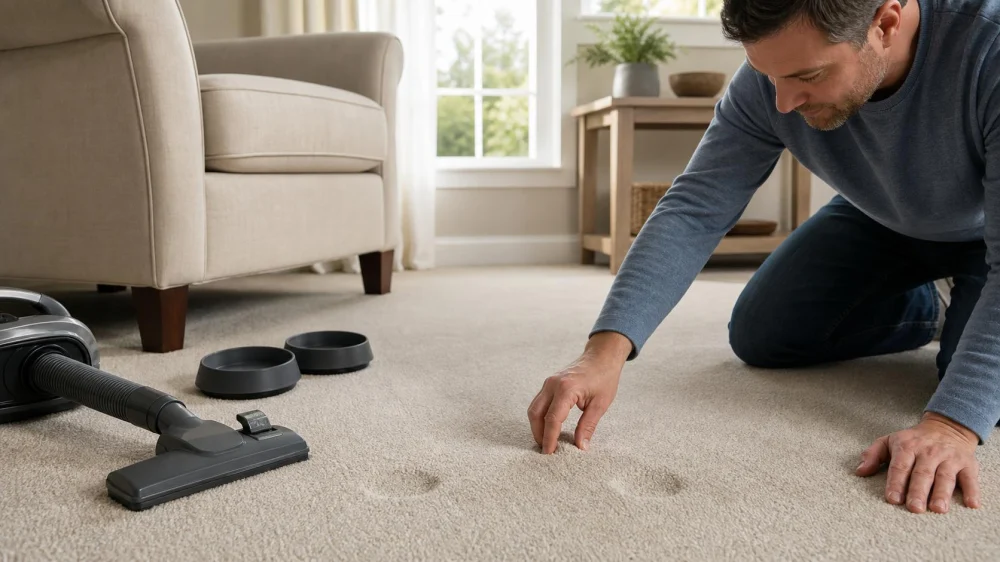
After moving furniture, vacuum the indentation using the carpet maker’s approved setting, then gently lift compressed pile with fingertips or the edge of a clean coin if the manufacturer permits. Give the fibers time to recover. Do not place a hot iron on carpet, flood the dent, or use ice without product approval. Deep or permanent depressions may require professional assessment.

What a furniture dent is
A furniture indentation is a localized depression where a leg, foot, or base concentrates weight on carpet pile and cushion. The visible dip can include bent fibers, compressed backing, compressed pad, or a combination. It is different from a traffic lane, broad matting, a seam issue, or subfloor depression.
Some fibers rebound more readily than others. The furniture’s weight, contact area, time in place, carpet construction, cushion, humidity, heat history, and soil all affect recovery. A dent that remains after several days is not automatically an installation defect.
Check the carpet before treatment
Find the carpet brand, style, fiber, purchase record, care guide, and warranty. Wool, nylon, polyester, triexta, olefin, loop pile, cut pile, and patterned constructions can have different limits. If you cannot identify the product, choose the least aggressive method and ask a carpet retailer or qualified cleaner.
Inspect in neutral light. Look for pulled loops, delamination, discoloration, broken backing, loose seams, dampness, odor, or a depression that continues into the floor. Photograph the area with and without side lighting and place a ruler nearby without pressing the pile. Stop if the carpet is wet or structurally damaged.
Start with a dry recovery method
- Remove the furniture safely; use help or lifting equipment rather than dragging it.
- Let the exposed area acclimate for several hours.
- Vacuum slowly in several directions with the carpet-approved brush height or suction-only setting.
- Use clean fingertips to separate and lift the pile gently.
- If the manufacturer approves, stroke the pile with the smooth edge of a clean coin.
- Vacuum again and wait 24 to 48 hours before judging the result.
Do not pull individual yarns, rake loops aggressively, or cut fibers. Avoid metal tools with sharp or dirty edges. Repeated hard scraping can create fuzzing, snags, or a texture change that is more visible than the original dent.
Use heat or moisture only when approved
Industry guidance notes that professional steam or hot-water extraction may aid some indentation recovery. That does not mean a homeowner should press a steam iron onto carpet. Direct heat can melt synthetic fibers, scorch wool, change texture, damage backing, or transfer color.
Before using any hair dryer, steamer, damp towel, or water method, obtain instructions for the exact carpet. Keep any approved heat source moving and separated by the specified distance. Use minimal moisture, protect the subfloor, and dry completely. Stop if color, odor, texture, adhesive, or backing changes.
The popular ice-cube method adds uncontrolled water to an absorbent floor system. It may be inappropriate for some fibers, dyes, backings, cushions, wood subfloors, or warranties. Use it only when the product maker explicitly approves the method and supplies directions.
Prevent future indentations
- Place wide, carpet-compatible furniture cups or glides under concentrated legs.
- Choose a cup large enough to distribute the load without a sharp rim.
- Check cups periodically for cracking, staining, or trapped grit.
- Move furniture a small distance periodically when practical and safe.
- Lift furniture instead of dragging it across pile and seams.
- Use moving boards or professional help for heavy items such as pianos and safes.
- Keep photos and care records for warranty or service discussions.
A protector reduces pressure concentration but cannot guarantee zero indentation. Extremely heavy items may require a load-distribution plan that considers carpet, cushion, subfloor, and structural limits.
Recovery checklist
- Identify carpet fiber and construction.
- Read the care guide and warranty before applying anything.
- Photograph the dent and check for moisture or damage.
- Begin with approved vacuuming and gentle pile lifting.
- Wait before repeating treatment.
- Avoid direct iron contact, flooding, harsh brushing, and improvised chemicals.
- Escalate persistent or widespread problems to a qualified professional.
- Add load-distributing cups before replacing furniture.
Frequently asked questions
Will every carpet dent disappear?
No. Some depressions improve gradually, while others are permanent because of fiber, backing, cushion, weight, or time. The written warranty determines whether a specific condition is covered.
Can I use a fork to lift the pile?
A fork has sharp points that can snag or split yarn. Use fingertips or a manufacturer-approved smooth tool instead, particularly on loop carpet.
How long should I wait?
Allow at least a day or two after dry lifting and vacuuming before repeating. Recovery can continue, but there is no universal deadline for every carpet.
When should I call a professional?
Call when the area is wet, discolored, delaminated, torn, widespread, unusually deep, or unchanged after approved dry care. A professional can distinguish pile compression from cushion or subfloor issues.
Sources and limitations
The Carpet and Rug Institute’s maintenance and troubleshooting bulletin notes that heavy furniture can create indentations, recommends glides or cups, and describes gentle pile lifting, vacuuming, and professional cleaning as possible recovery aids. Manufacturer directions still control for a specific product.
This guide is general home-care information, not a warranty judgment or professional cleaning specification. Carpet, cushion, adhesives, subfloors, furniture loads, and warranties vary. Test nothing beyond the written product instructions.
Next steps
Locate the care guide, photograph the dent, and start with approved vacuuming plus gentle dry lifting. Wait and compare. If it remains deep or shows damage, stop experimenting and request a carpet professional’s assessment. Before replacing furniture, add broad compatible cups and avoid returning the leg to the exact same spot.


 J & L Carpet4.0 (43 reviews)
 Lumber Liquidators4.0 (90 reviews)
 Allen Scott Flooring5.0 (9 reviews)
 Airbase Carpet & Tile Mart4.0 (479 reviews)
 Worldwide Wholesale Floor Coverings4.0 (227 reviews)
 Peter Pap Oriental Rugs Inc5.0 (4 reviews)
 The Pros and Cons of Carpet Tiles: Is This Modular Flooring Right for You?
 How to Clean Carpet After Renovations or Remodeling Projects
 How to Test Carpet Samples at Home Before Buying
 How to Match Your Carpet with Your Home’s Color Scheme
 Carpet Care Essentials Every Homeowner Should Know
 5 Signs Your Carpet Needs Replacement and How to Handle It