
Carpet Snag or Pulled Loop? Stop the Damage Before It Spreads
On this page
- Quick answer
- Identify a sprout, snag, or unraveling edge
- Protect the area immediately
- Document the damage and carpet details
- Handle one raised tuft cautiously
- Treat a pulled loop as a repair job
- Escalate raveling seams and edges
- Check installation and warranty coverage
- Prepare for a professional repair
- Prevent repeat snags
Quick answer
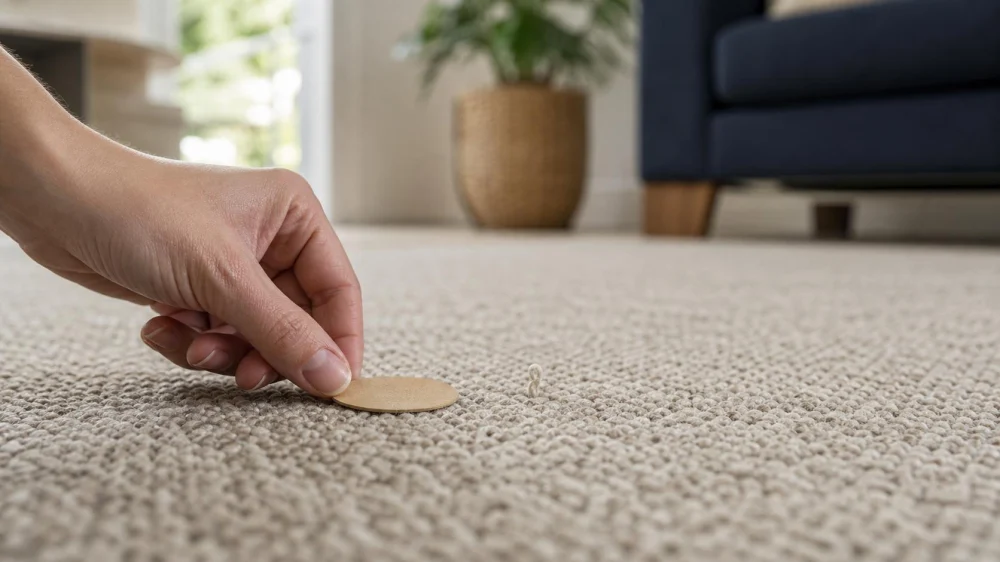
When carpet has a raised tuft, snag, or pulled loop, stop foot traffic and keep pets, vacuums, and furniture away. Never pull the yarn. Photograph the area, identify whether it is a single sprout or a connected loop, and check the manufacturer’s care instructions. A single isolated tuft on cut-pile carpet may sometimes be trimmed level with sharp scissors, but an extended loop, opening seam, stair edge, or growing run should be assessed by a carpet professional.
Do not use a razor, burn the fiber, glue the face yarn blindly, or continue vacuuming over it. Those actions can enlarge the damage, create a hard spot, change appearance, or affect warranty coverage. If the snag creates a trip hazard, block the area until it is repaired.
King Floor Supplies 2
BridgeportGreater Bridgeport Planning RegionConnecticut
215 Island Brook Ave, Bridgeport, CT 06606, USA
Identify a sprout, snag, or unraveling edge
A sprout is usually one tuft that stands above the surrounding cut pile. A snag may be a loop caught by a pet claw, shoe, toy, furniture part, or vacuum. A run appears when connected yarn pulls through multiple rows. Raveling at a seam or doorway can indicate an edge-sealing or installation problem rather than an isolated accident.
Look without tugging. Note whether the carpet is cut pile, loop pile, or a combination; whether the yarn is loose only at the face; and whether backing, seam tape, tack strip, or subfloor is visible. Damage on stairs, transitions, and doorways deserves quicker attention because traffic can spread it.

Commercial Carpets & Area Rugs for Sales NJ
Jersey CityHudson CountyNew Jersey
279 Grove St 2nd Floor, Ste 201, Jersey City, NJ 07302, USA
Protect the area immediately
Place a chair, clean box, or other visible barrier around the snag. Keep children and pets away, and reroute walking traffic. Turn off robot vacuums for that zone and do not use a beater bar, rotating brush, or suction tool directly over the loose yarn.
Lift nearby furniture rather than dragging it. Check chair glides, pet claws, rough shoe hardware, toys, floor vents, and transition strips for the item that caught the carpet. Remove or cover the cause before reopening the area; otherwise a repaired section can snag again.
Document the damage and carpet details
Take a wide photo showing location and lighting, a close photo with a ruler, and side views that show height. Record when the problem appeared, what contacted the area, whether it is spreading, and whether installation or cleaning occurred recently. Do not alter the yarn before documenting it.
Find the purchase invoice, manufacturer, style, color, fiber, lot information, installation date, retailer, installer, care guide, and warranty. Save any leftover carpet from installation; a professional may use matching material for a small insert if repair cannot preserve the original yarn.
Handle one raised tuft cautiously
The Carpet and Rug Institute installation tips say that when a single tuft extends beyond the surface, it can be clipped with scissors and should not be pulled. This guidance applies to an isolated sprout, not every form of snag or loop damage.
First confirm that the carpet manufacturer permits trimming. Protect surrounding fibers with your fingers or a flat card, use sharp scissors parallel to the pile, and trim only the excess to the surrounding height. Stop if the yarn moves, reveals a longer loop, or seems connected to adjacent tufts.
Treat a pulled loop as a repair job
Loop-pile carpet is constructed from connected yarn paths, so pulling or cutting an uncertain loop can create a visible run. Do not stretch the loop, tuck it with a sharp tool, or apply household superglue. Adhesive selection and placement depend on the carpet construction and backing.
Send photos to the retailer, installer, manufacturer, or qualified repair specialist. Ask whether the loop can be reset and secured, whether a small bonded insert is needed, and how pile direction and pattern will be matched. Get the proposed method and effect on warranty in writing.
Escalate raveling seams and edges
If loose yarn follows a straight seam, doorway, wall edge, stair, or transition, protect the entire line rather than treating only the most visible strand. The Carpet and Rug Institute notes in its carpet FAQ that loop-carpet seam raveling can occur when cut edges were not sealed.
Call the installer or retailer promptly. Do not peel the seam open to inspect it, hammer the edge, or add tape on top. Photograph the seam length, nearby transitions, furniture layout, and any changes over time so the professional can distinguish local impact from an installation issue.
Check installation and warranty coverage
Read exclusions for pet damage, improper vacuuming, unapproved repair, installation, and accidental damage. Note claim deadlines and whether the manufacturer requires inspection before alteration. A workmanship warranty from the retailer or installer may be separate from the carpet manufacturer’s product warranty.
Ask who should inspect first and whether moving furniture is required. Keep written messages, photos, invoices, care records, and any removed fiber. Do not describe the cause as certain when it is unknown; record observations and let the responsible party assess them.
Prepare for a professional repair
Clear small movable items but leave major furniture until the technician advises you. Provide leftover matching carpet, photos, product details, and access to the damaged area. Ask how the repair will be secured, whether a seam may remain visible, how long adhesive must cure, and when vacuuming can resume.
Before approving work, confirm price, warranty, color or texture limitations, and whether a patch will follow the original pile direction. Photograph the completed repair under daylight and room lighting, then keep the receipt and repair description with the carpet records.
Prevent repeat snags
Maintain pet nails, repair rough furniture glides, lift rather than drag furniture, and inspect toy wheels, shoe fasteners, door bottoms, vents, and transition strips. Use a vacuum setting and attachment approved for the specific carpet construction; some high or loop piles require reduced brush action.
Walk high-traffic edges and stairs periodically to catch small changes early. Address loose transitions and opening seams before yarn is exposed. The safest rule is simple: isolate first, never pull, make only the manufacturer-approved correction for a true single sprout, and refer connected or expanding damage to a professional.


 Saba Rugs & Flooring5.0 (1 reviews)
 Clifford's Carpet & Water Beds4.0 (9 reviews)
 The Home Depot4.0 (1425 reviews)
 Carpets Unlimited Inc.(CUI Floors)0.0 (0 reviews)
 McDonald Flooring & Design, Inc.4.0 (7 reviews)
 The Home Depot3.0 (1253 reviews)
 Carpet Static Electricity: A Safe Troubleshooting Guide
 Carpet Wrinkles or Buckles? Reduce the Trip Risk and Find the Cause
 How to Choose Carpet That Improves Home Comfort
 Carpeting vs. Hardwood Floors: A Comparison of Style and Durability | CarpetHub
 Best Carpet Choices for Homes in Hot and Dry Climates
 Carpet Design Mistakes to Avoid in Your Home Makeover