
Carpet Static Electricity: A Safe Troubleshooting Guide
On this page
Quick answer
Carpet static usually increases when dry indoor air and friction let electrical charge build on a person, then discharge at a metal object. Start by measuring relative humidity, reviewing footwear and fabrics, and cleaning according to the carpet maker’s instructions. Do not soak carpet or spray unapproved chemicals. Repeated shocks from an appliance, outlet, or wet area need electrical evaluation.

Why carpet static happens
Static electricity is an imbalance of electrical charge that can build when materials contact and separate. Walking across carpet creates repeated contact among fibers, socks, and shoe soles. A brief spark may occur when the charged person touches a conductive object such as a metal doorknob.
Dry air makes charge more likely to persist. Synthetic carpet fibers, rubber-soled shoes, fleece clothing, rolling chairs, and repeated shuffling can affect the result. Because several factors interact, a new static problem does not automatically prove the carpet is defective.

Measure humidity first
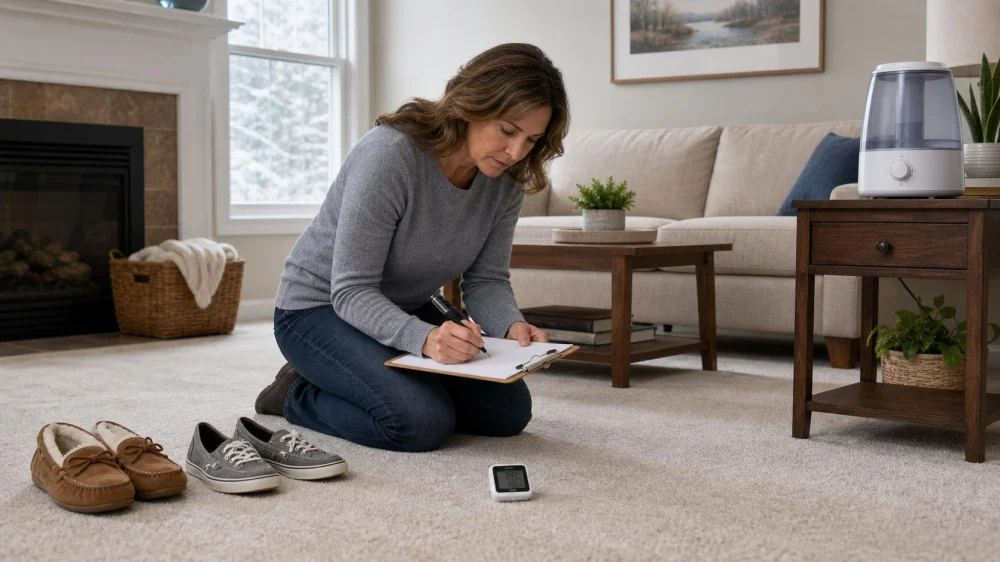
Use a small hygrometer to record relative humidity in the affected room for several days. Note the time, outdoor weather, heating or cooling use, and when sparks occur. Compare rooms instead of trusting how the air feels.
The U.S. Environmental Protection Agency generally recommends indoor relative humidity around 30% to 50%. That range also limits excess moisture concerns. Do not raise humidity blindly: condensation on windows or damp carpet means the moisture plan needs adjustment.
If a humidifier is appropriate, follow its instructions, clean it on schedule, and place it where mist cannot settle on carpet. EPA guidance warns that excessive humidity and poorly maintained humidifiers can support biological growth or disperse contaminants.
Reduce charge safely
- Try different indoor shoes or natural-fiber socks for several days and log the change.
- Avoid shuffling and lift feet normally when walking.
- Layer clothing differently if fleece or another synthetic fabric seems to increase sparks.
- Use a properly maintained humidifier only when measurements show dry air.
- Touch a grounded metal object with a key or metal tool held securely if you need to discharge before handling sensitive electronics.
- Keep computer components and other static-sensitive devices off carpet and follow their manufacturer’s grounding procedures.
Do not attach improvised wires to outlets, pipes, radiators, or electrical equipment. Do not defeat a ground pin or modify the building wiring. Static comfort measures and electrical grounding are different tasks.
Check carpet care choices
Vacuum using a machine and setting approved for the carpet construction. Soil and residues can change how fibers feel and interact, but aggressive brushes can damage some looped, wool, or delicate carpets. Check the carpet and vacuum manuals.
Before applying an anti-static spray, ask the carpet manufacturer or retailer whether the exact product is compatible with the fiber, stain treatment, dye, backing, and warranty. Test only as directed in an inconspicuous area. Avoid homemade mixtures: a liquid can leave residue, alter appearance, attract soil, or wet the backing and pad.
If static began after professional cleaning, note the date, method, products, drying time, and indoor humidity. Ask the cleaner and carpet maker for guidance rather than adding another chemical immediately.
Know when it may not be static
A tiny, momentary spark after walking on carpet is different from a sustained tingle or shock tied to one appliance, switch, outlet, plumbing fixture, wet area, or damaged cord. Stop using suspect equipment and keep people away from water and exposed electrical parts.
Seek a qualified electrician or appropriate service professional when shocks occur without movement on carpet, repeat at the same powered object, cause pain or muscle response, leave a burn, trip protection devices, or accompany heat, odor, buzzing, flickering, moisture, or visible damage. Call emergency services for injury, smoke, or fire.
Troubleshooting checklist
- Record the room, surface, object touched, footwear, clothing, and weather.
- Measure relative humidity instead of estimating it.
- Try one reversible change—such as different shoes—at a time.
- Keep carpet dry and follow approved vacuum and care directions.
- Ask before using an anti-static treatment.
- Protect sensitive electronics using their manufacturer’s handling guidance.
- Separate brief movement-related sparks from appliance or wiring symptoms.
- Stop and obtain professional help when electrical warning signs appear.
Frequently asked questions
Does more humidity always solve carpet static?
No. It may reduce charge buildup when air is dry, but fibers, footwear, clothing, and movement still matter. Excess humidity can create condensation, dust-mite, or mold concerns.
Can I mist water directly onto carpet?
No. Uneven wetting can reach backing or padding, cause spots, and create moisture problems. Manage room humidity with measured, maintained equipment instead.
Is static proof that new carpet is defective?
No. Document conditions and ask the seller or manufacturer about the specific product. A warranty decision requires product specifications, installation details, and the written warranty.
Are anti-static sprays safe for every carpet?
No. Compatibility varies. Use only a product approved for the exact carpet and follow label directions, ventilation requirements, testing, and drying instructions.
Sources and limitations
The EPA indoor-air guide recommends measuring and generally maintaining indoor humidity between 30% and 50%. The EPA humidifier guide notes that humidification can reduce static nuisance while warning against excess moisture and poor maintenance.
This article is general home-care information, not electrical, medical, warranty, or indoor-air diagnosis. Carpet products, building conditions, and health needs differ. Follow product instructions and use qualified professionals for electrical or persistent moisture concerns.
Next steps
Measure humidity for several days, log where sparks occur, and change one factor at a time. Keep all moisture and chemical treatments within carpet-maker guidance. If the sensation is sustained, tied to powered equipment, or accompanied by another electrical warning sign, stop troubleshooting the carpet and arrange a professional electrical check.


 OC Floor Gallery5.0 (10 reviews)
 Floor Expo4.0 (180 reviews)
 Big Run Flooring4.0 (60 reviews)
 Homesense4.0 (243 reviews)
 Keystone Floor Works4.0 (12 reviews)
 Floor Coverings International Mainline4.0 (73 reviews)
 The Pros and Cons of Wall-to-Wall Carpet for Modern Homes
 Stylish Carpet Ideas That Perfectly Complement Modern Decor
 How Carpet Adds Comfort and Warmth to Your Home
 The Best Carpet for Homes with High Foot Traffic: Durable and Stylish Options
 How to Get Rid of Bad Odors in Your Carpet: Proven Solutions
 How to Replace Carpet Without Replacing Your Entire Floor