
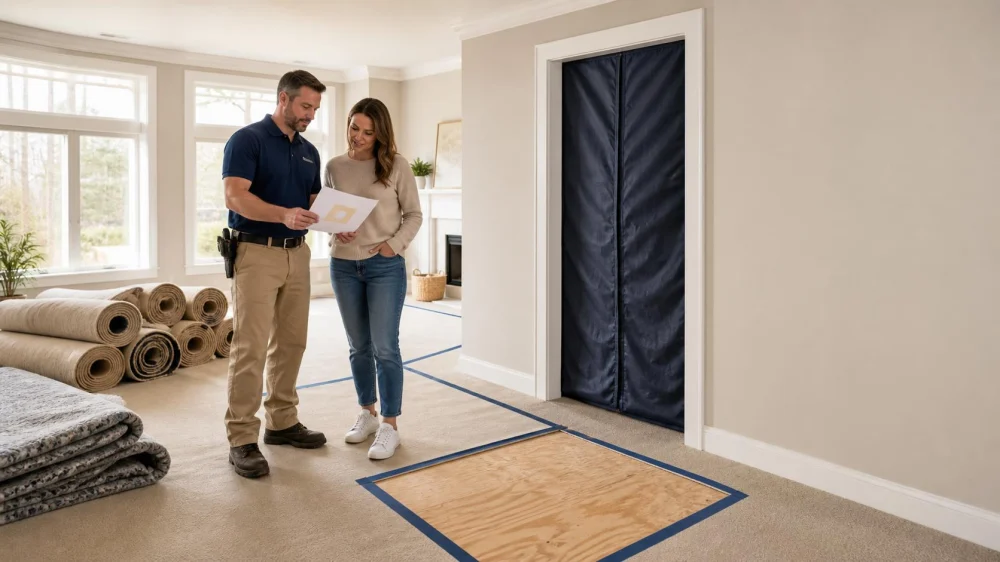
Old Carpet Removal Prep: Scope, Safety, and Subfloor
Before old carpet is removed, confirm who moves furniture, disconnects appliances, removes carpet and pad, handles tack strip and transitions, disposes of material, cleans the area, and addresses the exposed subfloor. Clear personal items, plan access, isolate children and pets, and discuss dust control. In an older or damaged building, stop before disturbing suspect material and obtain qualified assessment. Removal reveals conditions; it does not automatically include moisture, structural, pest, or hazardous-material repair.
In this guide
Write the Removal Scope
Match the proposal to every room, closet, stair, landing, and transition. Specify carpet, pad, adhesive, staples, tack strip, thresholds, baseboards, doors, and debris. “Tear-out included” may not cover glued areas, stairs, heavy furniture, floor repair, or disposal fees.
Ask who is responsible for damage discovered beneath the carpet and how change orders are approved. Establish unit prices or an approval process for extra labor. Photograph the room, trim, doors, and existing damage before work begins.

Colonial Mills, Inc
East ProvidenceProvidence CountyRhode Island
77 Pawtucket Ave, Rumford, RI 02916, USA
Clear Furniture and Belongings
Remove small items, drawers, electronics, lamps, artwork, bedding, breakables, plants, and valuables. Empty closet floors and create a route wide enough for rolled material. Label items by destination so they are not placed on finished areas or block exits.
Confirm whether the crew moves large furniture and what it will not move, such as aquariums, safes, pianos, adjustable beds, antiques, pool tables, or connected appliances. Use qualified movers or trades when required. Do not hide fragile items in cabinets that will be shifted.
Orange Carpet & Wood Gallery
Roxbury TownshipMorris CountyNew Jersey
470 NJ-10 West, Ledgewood, NJ 07852, USA
Plan Access and Occupant Safety
Arrange parking, elevator, loading-area, gate, and building permissions. Protect a continuous route from the work area to the exit. Keep smoke alarms, electrical panels, fire doors, and required egress accessible.
Children, pets, and anyone sensitive to dust should remain out of the work zone. Tack strip, staples, blades, rolls, and exposed thresholds are hazards. Decide where occupants can safely stay and how bathrooms and essential rooms will be reached.
Control Dust and Air Paths
Ask the contractor how it will contain dust, collect debris, protect adjacent floors, and clean registers. HVAC strategy depends on the building and conditions; do not block ventilation or operate equipment contrary to professional guidance.
Close or isolate personal items, food, and electronics. Discuss whether doors, temporary barriers, mats, and filtered equipment are appropriate. Ordinary dust control is not hazardous-material abatement.
Pause for Suspect Materials
Old flooring systems, adhesives, backing, patching compounds, or underlying resilient flooring may contain regulated materials depending on age and product. Mold, sewage, pest contamination, lead-painted trim, or damaged electrical components may also require specialized assessment.
Appearance cannot reliably identify asbestos or every hazard. Do not sand, scrape, cut, pull, or sample suspect material yourself. Stop work, restrict access, and use qualified inspectors or abatement professionals as required by local law. Project schedules should allow for test results and proper handling.
Confirm Disposal and Recycling
Ask whether haul-away, landfill fees, bags, elevator protection, and cleanup are included. Carpet recycling programs have material, contamination, size, and location requirements; verify acceptance before promising that material will be recycled.
Do not place rolls in shared dumpsters, curb areas, or hallways without permission. If the owner handles disposal, confirm weight, roll size, transport vehicle, facility hours, fees, and local rules.
Inspect the Exposed Subfloor
Once removal is complete, photograph the full floor and closer conditions before covering it. Look for staining, odor, moisture evidence, movement, damage, protruding fasteners, adhesive, uneven patches, and gaps. A qualified professional should determine cause and repair.
Ask the installer to state substrate requirements for the new carpet and pad. Moisture testing, fastening, leveling, cleaning, drying, or structural repair may be separate work. Do not conceal an active leak or soft area to preserve the schedule.
Protect the Installation Schedule
Decide whether removal and installation occur the same day or allow an inspection window. Same-day work reduces disruption but leaves less time for unexpected repairs. Confirm what happens to materials and furniture if installation must pause.
Before new material enters, verify that the room is dry, clean, approved, and at required environmental conditions. Confirm product, dye lot, pad, direction, seams, transitions, and open change orders again.
- Rooms and removal components listed
- Furniture responsibilities and exclusions confirmed
- Access, parking, elevator, and occupant plan ready
- Dust containment and adjacent-floor protection defined
- Suspect material left undisturbed for qualified assessment
- Disposal method, fees, and permissions verified
- Subfloor photographed and acceptance criteria reviewed
- Contingency for moisture, repair, or delayed installation documented
Frequently Asked Questions
Can I remove carpet myself?
It may be possible in a straightforward modern installation, but sharp tack strip, heavy rolls, dust, stairs, and suspect underlying materials create risks. Check the building, disposal rules, and new-floor warranty first.
Should tack strip always be replaced?
Not automatically. Condition, placement, new system, pest or moisture exposure, and installer requirements matter. Let the installer decide and document the scope.
What if the subfloor is stained?
Do not assume the cause from color. Photograph it and ask a qualified professional to assess moisture, odor, contamination, damage, and required repair.
Can furniture stay on one side of the room?
Only if the contractor approves a staged method. It may increase labor, seams, risk, and time, and some warranties or installations require a fully clear room.
How long should the room stay empty?
That depends on removal, repairs, moisture, installation, adhesive or product instructions, ventilation, and furniture-moving requirements. Get a project-specific schedule.
Removal is the transition between an old finish and the conditions the new floor must rely on. A written scope, controlled access, hazard pause, and documented subfloor inspection keep discoveries visible. Building rules and environmental requirements vary, so use qualified local professionals.


 Lewistown Floor Company4.0 (7 reviews)
 Walmart Supercenter3.0 (2500 reviews)
 Floor & Decor4.0 (1236 reviews)
 Ace Hardware & Lumber of Bradford4.0 (106 reviews)
 Luxury Floors Inc4.0 (5 reviews)
 The New England Collection3.0 (2 reviews)
 The Best Carpet Options for Apartments and Rentals
 Test Carpet Samples at Home: Light, Traffic, and Furniture
 Best Carpet Padding Options for Comfort and Durability | CarpetHub
 How to Add Value to Your Home with High-Quality Carpets
 How to Choose Carpet That Fits Your Budget and Style
 The Future of Carpet Technology: What’s Next in Flooring?