
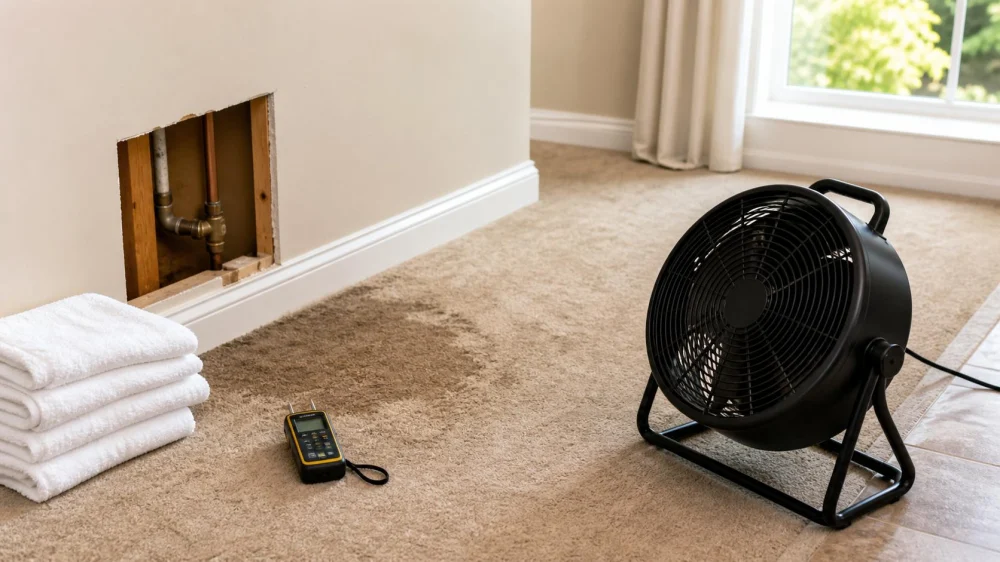
Wet Carpet After a Leak: Stop Water, Limit Access, and Document Drying
On this page
Quick answer
After a clean-water leak wets carpet, stop the source if safe, isolate electricity hazards, move people and pets away, and document the extent before extraction. Identify whether the water is clean, contaminated, or unknown; sewage or outdoor floodwater needs professional handling. Contact the insurer, landlord, plumber, and restoration provider as applicable. Carpet, pad, subfloor, walls, and contents may dry at different rates, so use measured professional drying and do not rely on surface feel alone.
Rob's Carpet Services
AnsoniaNaugatuck Valley Planning RegionConnecticut
29 Murray St, Ansonia, CT 06401, USA
Why it matters
Moisture can spread beneath carpet beyond the visible stain, damage backing and pad, swell subfloors, affect adhesives, and support microbial growth. Delayed or incomplete drying makes later decisions harder.
This United States property guide is general. Water category, elapsed time, materials, electricity, insurance, tenancy, climate, and restoration standards vary. Follow emergency and qualified professional guidance.

Practical checklist
- Stop or isolate the water source without entering an electrical hazard.
- Record discovery time, source, water appearance, odor, and affected rooms.
- Photograph carpet, walls, furniture, ceilings, and contents before moving them.
- Keep children, pets, and unprotected occupants out.
- Notify the responsible property, insurance, plumbing, and restoration contacts.
- Map visible and measured moisture in carpet, pad, subfloor, baseboard, and walls.
- Track equipment, readings, disposal, cleaning, and clearance decisions.
Step-by-step plan
- Use emergency shutoff or professional help to stop active water while avoiding wet electrical equipment.
- Classify the source conservatively; do not vacuum sewage or unknown floodwater with household equipment.
- Move dry, safe contents to a protected area and place furniture only as restoration staff directs.
- Extract and lift materials using appropriate equipment and personal protection.
- Set drying equipment on safe circuits with clear airflow and protected cords, following the restoration plan.
- Take repeat moisture readings at documented locations rather than judging only the top fibers.
- Clean, replace, reinstall, or close materials only after the responsible professional confirms the drying and contamination criteria.
Save leak source and repair, discovery and stop times, photos, water category decision, affected-material map, moisture readings, equipment and electrical setup, insurer or landlord notices, invoices, disposal, drying completion, and final inspection.
Limits and warning signs
Fans alone may spread contaminants or fail to dry pad and subfloor. A dry surface, reduced odor, or one low reading does not prove every layer is dry.
Leave and use emergency help for wet electrical systems, structural sagging, active sewage, fuel or chemical contamination, or unsafe indoor conditions. Use qualified restoration for widespread, hidden, contaminated, or delayed water damage.
Frequently asked questions
Can carpet be saved after a leak?
It depends on water source, time, carpet and pad condition, backing, subfloor, and successful cleaning and drying.
Should I pull up the carpet myself?
Only if safe and appropriate; tack strips, contamination, heavy wet material, and warranty issues can require professionals.
How do I know the pad is dry?
Moisture should be measured in each layer and compared with an established drying goal.
Can I run household fans?
First address electrical safety and water category; professional placement and monitoring may be needed.
Sources and evidence
The guide applies water-damage source control, electrical safety, contamination category, moisture mapping, material-layer, drying-equipment, insurance documentation, and clearance principles: stop, isolate, measure, monitor, and verify.
Conclusion and next steps
Stop the source safely, restrict access, document the water and affected layers, notify responsible parties, and use measured drying appropriate to the contamination level before reinstalling or closing materials.


 Floor Coverings International of Metro East Rochester, NY5.0 (30 reviews)
 Persian Gallery New York5.0 (8 reviews)
 Bastian Carpet One Floor & Home4.0 (39 reviews)
 Avalon Flooring - Warrington, PA4.0 (368 reviews)
 Lehigh Valley Rug Company4.0 (14 reviews)
 Floor & Decor4.0 (37 reviews)
 Furniture Prep for Carpet Installation: A Room-by-Room Checklist
 The Best Carpet Options for Apartments and Rentals
 How to Test Carpet Samples at Home Before Buying
 Carpet Wrinkles or Buckles? Reduce the Trip Risk and Find the Cause
 Why Investing in Carpet Underlayment Will Improve Comfort and Longevity
 The Benefits of Carpet Tile for Easy Installation and Maintenance